7.8% Growth: Jobs Created or Just a Mirage?
Nov 5, 2026, 22:49 IST
Summary
The debate over India's 7.8% growth centers on job creation and economic realities. Neelkanth Mishra argues that while jobs are being created, they may not suffice for future demands. Anant Goenka emphasizes manufacturing growth for job absorption, while Surjit Bhalla highlights a disconnect between job availability and demand for high-paying roles. A report reveals rural women's participation increases without financial security.
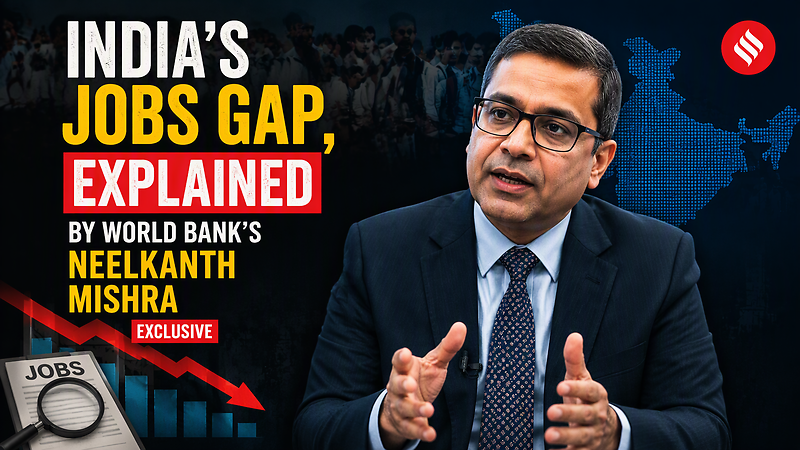
As India's economy boasts a 7.8% growth rate, the pressing question remains: where are the jobs? Various voices in the debate present differing views on the job market's realities amidst this economic growth.
Neelkanth Mishra from the Indian Express asserts that the assumption of no job creation is misguided. He argues that while growth is evident in sectors like cement, steel, and automobiles, the real concern is whether the country is generating sufficient jobs. Mishra notes, "If there is 7% growth, it is unlikely that all this growth is due to productivity alone," highlighting that actual job creation is happening but may not meet future demands. He points to the demographic dividend and suggests that absorbing new workers, particularly women and underemployed farmers, would necessitate a more ambitious growth target of 10%.
Conversely, Anant Goenka of India Today questions whether the country is facing a job crisis, particularly in the manufacturing sector. He believes that enhancing manufacturing's contribution to GDP from 15% to 25% could create significant employment opportunities. Goenka acknowledges the challenges posed by automation but argues that achieving a manufacturing growth rate of 15-17% could still absorb many workers. He emphasizes the importance of localizing production in future sectors like electronics and robotics to harness job potential.
Surjit Bhalla, also from India Today, challenges the notion that jobs are the primary issue. He states that while high-paying jobs have seen a 4% annual growth since 2011, the supply of university graduates has outstripped demand, leading to stagnation in real wages. Bhalla claims, "Jobs are not the problem," pointing instead to a global oversupply of educated workers that dilutes the value of available positions.
Adding to the discussion, a report from Business Standard highlights the changing dynamics of rural women's participation in the workforce. While the labor force participation rate for rural women has surged from 24.6% to 47.6% between 2017-18 and 2023-24, much of this increase is in self-employment or unpaid family work. The report notes that self-employed rural women now make up 72.2%, with 59% working as unpaid helpers. This raises questions about whether increased participation translates into financial security, as regular salaried jobs have decreased from 11% to 8%.
The debate encapsulates a multifaceted view of India's economic landscape. While Mishra and Goenka emphasize growth and potential job creation, Bhalla highlights the disparity between job availability and demand for high-paying roles. Meanwhile, the situation of rural women underscores the complexity of employment statistics, revealing that participation alone does not guarantee economic stability. As the discussion unfolds, it becomes clear that the challenge lies not just in creating jobs, but in ensuring those jobs provide meaningful opportunities for all segments of the population.