Are Big Online Sales Genuine Discounts or Price Trickery?
Oct 7, 2026, 17:42 IST
Summary
The debate over online sales discounts is heated, with Ravish Kumar suggesting that discounts may not reflect real savings, while Dhruv Rathee highlights manipulative pricing strategies. Both creators advocate for using price comparison tools to make informed purchases, yet they differ on the implications of their findings, emphasizing the need for consumer vigilance in online shopping.
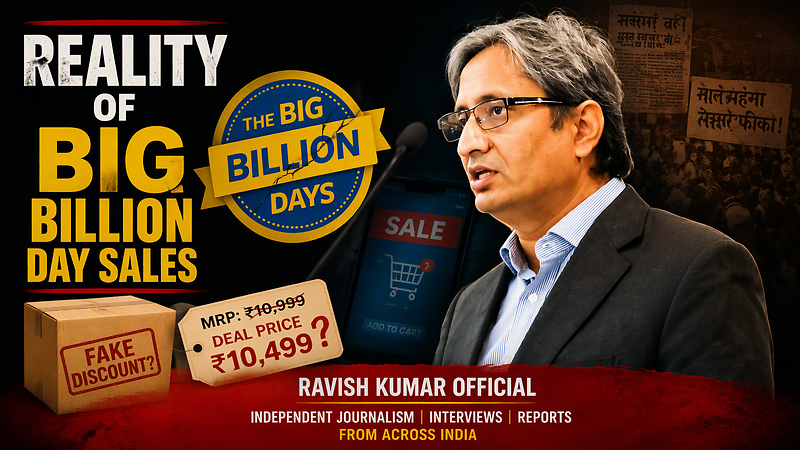
The debate surrounding the authenticity of discounts during major online sales events like Big Billion Days and Great Indian Festival has intensified. Two prominent voices in this discussion are Ravish Kumar, a popular journalist, and Dhruv Rathee, a well-known content creator. They both scrutinise the strategies used by online retailers but arrive at different conclusions regarding the nature of these sales.
Ravish Kumar argues that discounts advertised by platforms like Amazon and Flipkart may not be as genuine as they appear. In his video, "Reality of Big Billion Day Sales," he highlights how price histories can expose misleading discounts. He notes, 'Price histories can reveal products priced higher than previous averages,' indicating that consumers might believe they are getting a deal when they are not. Kumar demonstrates this by using price comparison tools that show the same products listed at lower prices on different platforms. He asserts, 'Some products are cheaper before the sale starts, so why wait for a big sale?'
Conversely, Dhruv Rathee takes a more critical stance on the tactics employed by these retailers. In his video, "Reality of Flipkart Big Billion Days & Amazon Sales (Real or Fake?)," he provides specific examples of price manipulation. Rathee explains that pre-sale markups create an illusion of discounts, stating, 'The weighing scale returned to ₹199 after rising from ₹199 to ₹1,498.' He illustrates this point with three products, revealing that two of them were actually sold for higher prices during the sales than their original prices. Rathee concludes that these sales often result in consumers paying more than they would have without the supposed discounts.
Both creators agree on the importance of using tools like price comparison apps to make informed purchasing decisions. Kumar suggests that consumers should utilize extensions like Buyhatke to track historical prices and avoid being misled. Similarly, Rathee encourages viewers to check the price history before making purchases, stating, 'Buyhatke's AI scanner compares prices and flags deals costlier than previous sales.' This shared advice underscores the necessity for consumers to be vigilant and informed.
However, the creators differ in their interpretations of the implications of these findings. While Kumar emphasizes the need for smart buying decisions, Rathee warns against the manipulative strategies that retailers employ to create a false sense of savings. This fundamental disagreement reflects a broader concern about consumer protection and transparency in online shopping.
As the debate continues, it is clear that both Ravish Kumar and Dhruv Rathee are advocating for greater awareness among consumers. Their insights serve as a cautionary tale about the potential pitfalls of online shopping, urging buyers to question the authenticity of discounts and to verify prices before making purchases. In a world where online sales are a significant part of the retail landscape, understanding the truth behind these discounts is more important than ever.