GDP Growth vs. Kitchen Budget: A Deep Dive into Economic Discontent
Nov 23, 2026, 22:20 IST
Summary
The wire presents two perspectives on India's GDP growth amidst rising kitchen budgets. One video highlights increasing inflation and declining wages, while the other discusses a predicted 6% drop in festive spending due to financial strain. Both perspectives reveal a disconnect between government claims of economic success and the reality faced by ordinary citizens, emphasizing the need for accurate data and effective policies.
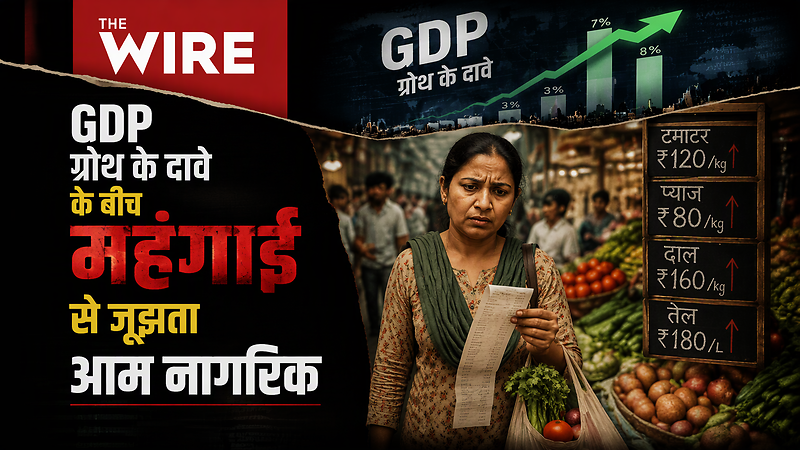
The debate surrounding India's booming GDP juxtaposed with rising kitchen budgets reveals a stark contrast between economic indicators and everyday realities. The wire, a prominent media outlet, presents two compelling perspectives that highlight the struggles of the middle class amidst claims of economic growth.
In the first video titled "GDP ग्रोथ के दावे के बीच महंगाई থেকে জুড়ে নাগরিক," the wire argues that inflation is on the rise while incomes and median wages have actually declined. The creator emphasizes that as gold prices soar, very few Indians can afford to buy gold, leading to a significant increase in gold-backed borrowing, which has surged six to seven times. This stark reality, according to the wire, showcases a widening gap between the government's optimistic economic claims and the everyday struggles faced by citizens. They assert, "Manipulated economic data undermines effective policymaking and conceals persistent poverty," calling for accurate data collection to inform policy decisions that could genuinely improve living standards.
Contrastingly, in another video titled "मिडिल क्लास की दिवाली या दिवाला?" the wire examines the festive spending habits of urban India, revealing a predicted 6% decrease in expenditure during the Diwali season. This decline, they argue, is largely attributed to the financial strain of inflation on middle-class consumers, who are now forced to rely on savings for festival expenses. The creator notes that many are choosing not to spend on traditional festivities, relying instead on cheaper alternatives, which indicates a broader economic malaise. They highlight that the government is extending the Agniveer service amid youth unrest, suggesting that young people are increasingly frustrated with job opportunities, hinting at a deeper societal issue stemming from economic policies.
Both perspectives converge on the theme of economic discontent, highlighting how rising inflation and stagnant wages contribute to a sense of financial instability. The wire's arguments from both videos illustrate a growing disconnect between government proclamations of economic success and the lived experiences of ordinary citizens. The assertion that "people are spending less due to inflation" echoes the sentiment expressed in the first video regarding the manipulation of economic data, which obscures the reality of poverty and financial struggle.
While the wire presents a grim picture of economic disparity, it also raises questions about the effectiveness of current policies in addressing these issues. The call for accurate data collection and the critique of manipulated statistics underline the need for a more honest appraisal of the economic situation in India. As the festive season approaches, the tension between reported GDP growth and the actual experiences of consumers becomes even more pronounced, leaving many to wonder how long the narrative of economic success can hold up against the harsh realities of inflation and reduced purchasing power.
In summary, the wire's exploration of these contrasting perspectives provides a nuanced understanding of the economic landscape in India. As the debate continues, the focus remains on how policymakers can bridge the gap between economic growth and the everyday realities faced by citizens.