India's Russian Oil Trade: A Balancing Act Between Autonomy and Sanctions Risk
Oct 29, 2026, 10:30 IST
Summary
The debate over India's record-high Russian oil imports centers on strategic autonomy versus sanctions risk. CA Rachana Ranade explains how Ukraine's impact on Russian refineries has led to this trade. Sanjay Dixit warns of US pressures, while Aadi notes Russia's need for Indian gasoline. The Khanversation Channel provides context on India's shifting oil trade dynamics.
The recent surge in India's import of Russian oil has sparked a contentious debate about the implications for India's strategic autonomy and the risks of sanctions. Content creators are weighing in with varying perspectives, illustrating the complexities of global energy markets amidst geopolitical tensions.
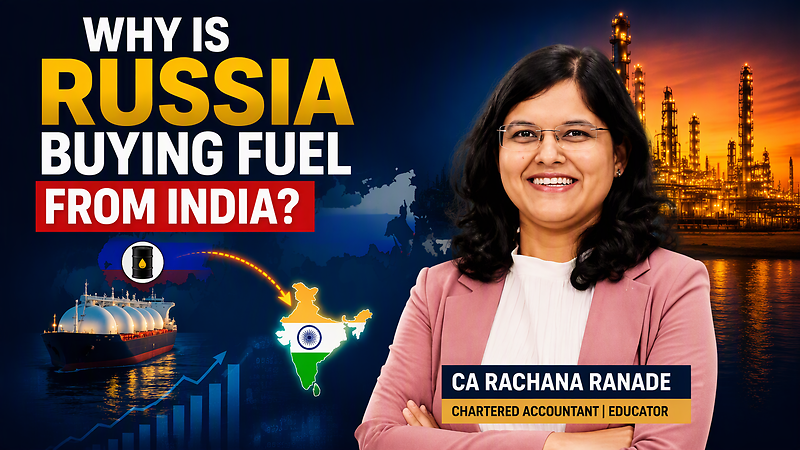
Youtuber CA Rachana Ranade highlights a surprising twist in the energy trade, explaining that Russia, despite being a major oil producer, is now importing petrol from India. She points out that Ukrainian drone attacks have damaged several Russian refineries, significantly reducing the country's capacity to convert crude oil into refined products. Ranade states, 'India imports large quantities of discounted Russian crude oil, refines it in its world-class refineries, and exports petrol and diesel across the world.' This exchange, she argues, is a fascinating example of how global energy markets can shift in response to geopolitical events.
Contrasting this perspective, Sanjay Dixit from The Jaipur Dialogues focuses on the external pressures faced by India. He reports that a US senator has explicitly warned both India and China to cease their purchases of Russian oil and gas, suggesting that there will be consequences for continued reliance on Russian energy. Dixit conveys the urgency of the situation, stating, 'You better clean up your act. Buy your oil and gas somewhere else.' This raises critical questions about India's strategic choices in the face of international sanctions and pressures.
In a similar vein, Aadi from DEF Talks adds that the ongoing Ukrainian attacks have led Russia to consider importing refined gasoline from India, as their production has plummeted by 25%. He remarks on the advantages of India's refining capabilities, noting, 'It’s really amazing to see this.' Aadi echoes the sentiment that India’s energy trade is multifaceted, involving sales to various global players, including the US and Europe.
Meanwhile, the Khanversation Original Channel presents a broader context of India's evolving relationship with Russian oil. They illustrate that before February 2022, India primarily sourced its oil from the UAE, Iraq, and Saudi Arabia, with minimal trade with Russia. The channel asserts that the war in Ukraine and subsequent sanctions have prompted a significant shift, with India's trade in Russian oil skyrocketing to approximately $60 billion by March 2023. This shift has allowed Western countries to purchase Russian oil, refined in India, under the guise of it being non-Russian, a tactic designed to circumvent sanctions.
The debate reflects a deeper tension: while some creators like Ranade and Aadi view the trade as a pragmatic response to market conditions and a demonstration of India’s refining prowess, others like Dixit highlight the geopolitical ramifications and potential risks of sanctions. The Khanversation Original Channel’s data underscores the scale of this trade and the strategic calculations involved.
Ultimately, this discourse illustrates the delicate balance India must maintain between leveraging its refining capabilities and navigating the complex landscape of international relations and sanctions. As the situation continues to evolve, the implications of India's oil trade with Russia remain a critical point of discussion in the context of global energy politics.