India–US Trade Relations: Firm Stance vs Compromise Under Trump
Nov 6, 2026, 10:00 IST
Summary
The debate on India–US trade relations under Trump highlights conflicting views on whether India should hold firm or compromise. Aadi emphasizes legal challenges to tariffs, while Mukhtar Khan suggests stagnation may benefit India. Bhagyashree Thakkar warns of uncertainty in negotiations, and Gaurav Arya notes India's refusal to open key sectors. Marco Rubio claims an agreement is nearly complete, despite India's rejection of terms.
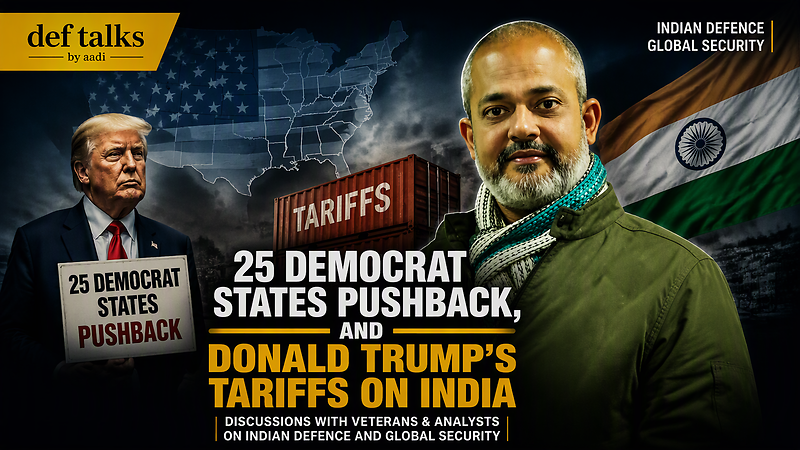
The debate over India–US trade relations under the Trump administration has intensified, with various content creators offering distinct perspectives on whether India should hold firm or compromise. Popular YouTuber Aadi from def talks by aadi highlights the legal challenges posed by 25 Democratic-led states against Trump's tariffs on India, stating, "Twenty-five Democratic-led states challenged Trump’s India tariffs in U.S. trade court." He argues that the tariffs, imposed under Section 301, have turned India into an election issue in the US, complicating negotiations.
In contrast, Mukhtar Khan of the khanversation original channel notes that trade discussions have stagnated since they began in February 2025. He asserts, "The discussions are stuck; neither side is moving forward or backward." Khan suggests that the status quo might actually benefit India, as the ongoing tariffs could deter a potentially disadvantageous trade deal, stating, "Trade deal not happening is probably beneficial to India at the moment."
Bhagyashree Thakkar from the video titled India - US Trade Deal Stuck? echoes this sentiment, asserting that US tariffs are being wielded as weapons. She explains that the negotiations are at a standstill, with the US proposing to cut tariffs from 50% to 18%, while India's market access is constrained by existing barriers. Thakkar emphasizes the unpredictability of US policy under Trump, claiming, "When America keeps changing the rules, Indian exporters face uncertainty."
Khan also points out that India’s trade surplus and tariff barriers are significant factors driving US demands for greater market access. He explains, "The predominant feature of the trade relations is India's trade advantage, which the US is keen to reduce." This sentiment is echoed by Gaurav Arya from The Chanakya Dialogues, who suggests that India is unwilling to budge on critical sectors like agriculture and dairy. He states, "India refuses to open agricultural and dairy sectors in US trade negotiations."
Conversely, Dr. Qamar Cheema, in his analysis, argues that despite the pressure from US tariffs, India is unlikely to back down from its current position. He remarks, "India has put a brake on negotiations; they are not moving."
In a broader context, the khanversation original channel raises questions about the viability of any guarantees from the US regarding tariffs. He suggests that India might seek matching tariffs if another country receives better treatment, highlighting a potential future dilemma for India.
Meanwhile, Marco Rubio’s comments in the Chanakya Dialogues indicate that the US believes the trade agreement is nearly complete, despite India’s rejection of certain terms. Rubio states, "We are about as close as you can be without having executed the agreement." This reflects a significant disconnect between US expectations and India’s negotiating stance, suggesting that the talks may face further delays.
Ultimately, the debate illustrates a complex interplay of interests, with India balancing the need for economic growth against the pressures of US tariffs and changing trade dynamics. As both sides stand firm in their positions, the future of India–US trade relations under Trump remains uncertain.