Iran-Israel-US Tensions: Deterrence, Negotiations, or Nuclear Escalation?
Nov 2, 2026, 18:59 IST
Summary
The debate over Iran's nuclear ambitions and its relations with Israel and the U.S. reveals starkly different perspectives. Dr. Qamar Cheema argues for Iran's strategic autonomy, while the Khanversation Original Channel criticizes unequal mediation efforts. Abhisar Sharma warns of potential shifts in Iran's nuclear policy, highlighting the risk of escalation if negotiations fail. The complex interplay of these viewpoints underscores ongoing tensions.
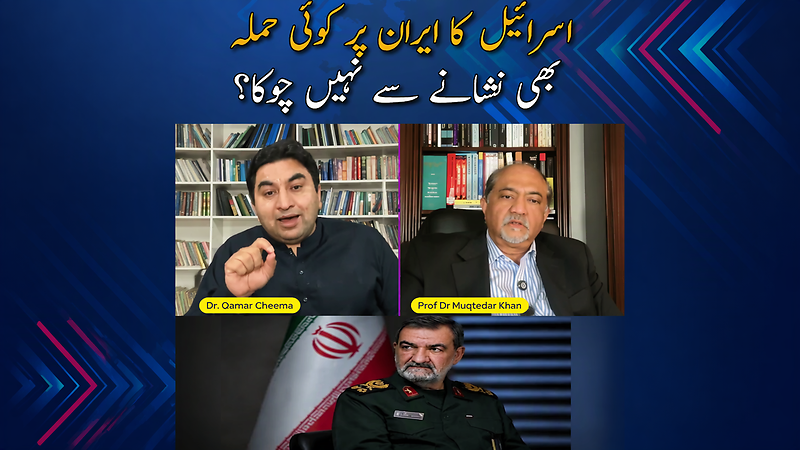
As tensions escalate in the Middle East, the debate surrounding Iran's nuclear ambitions and its relations with Israel and the United States intensifies. Various content creators present differing perspectives on whether deterrence, negotiations, or nuclear escalation is the appropriate response to the ongoing conflict.
Dr. Qamar Cheema, a commentator on global politics, argues that Iran has maintained a level of strategic autonomy despite its economic challenges. In his video, he claims that Iran's foreign policy remains intact, stating, "Iran accepted economic and diplomatic costs for challenging Israel and supporting Hezbollah and Hamas." He emphasizes that the internal struggles of individuals within the Iranian bureaucracy do not necessarily reflect a failure of the country's overall strategy. Cheema also notes the resilience of Iran in the face of pressure, asserting, "The Iranian leadership has not sold its foreign policy."
In contrast, the Khanversation Original Channel raises questions about the international mediation process, suggesting that peace efforts are disproportionately focused on Iran rather than the U.S. or Israel. The creator points out, "Mediators pressure Iran to accept terms but rarely influence America or Israel," highlighting a perceived imbalance in the diplomatic approach. This perspective underscores the frustration felt by some regarding the unequal treatment of Iran in negotiations.
Abhisar Sharma, in his analysis of Iran's nuclear doctrine, brings attention to the potential shifts within Iranian leadership regarding nuclear policy. He suggests that discussions about withdrawing from the Non-Proliferation Treaty (NPT) are gaining traction, stating, "Iranian officials are debating nuclear doctrine changes and possible NPT withdrawal." Sharma highlights the implications of a nuclear-armed Iran, comparing it to North Korea's status, arguing that such a move would alter the dynamics of U.S. and Israeli responses to Iran.
Cheema further elaborates on the consequences of failed negotiations between the U.S. and Iran, indicating that an American military strike could become a possibility. He poses a critical question: "Could the U.S. president attack Iran if negotiations fail?" This concern raises alarms about the potential for military escalation in the region, emphasizing the precarious balance between diplomacy and military action.
The various perspectives illustrate a complex landscape where each creator offers insights into the challenges and possibilities surrounding Iran's nuclear ambitions and its relationships with Israel and the U.S. While Cheema defends Iran's strategic choices, the Khanversation Original Channel critiques the mediators' focus, and Sharma warns of the potential consequences of nuclear escalation. The debate continues to evolve, reflecting the multifaceted nature of international relations in this volatile region.