Iran-Pakistan Border Closure: Pressure Tactic or Energy Threat?
Nov 2, 2026, 16:30 IST
Summary
The closure of the Iran-Pakistan border has sparked debate over its implications for energy supplies. Dr Qamar Cheema argues that while LPG from Iran is a small part of Pakistan's energy mix, the closure may lead to market panic. He also suggests that Iran could use gas supply restrictions as a pressure tactic, highlighting the geopolitical complexities at play.
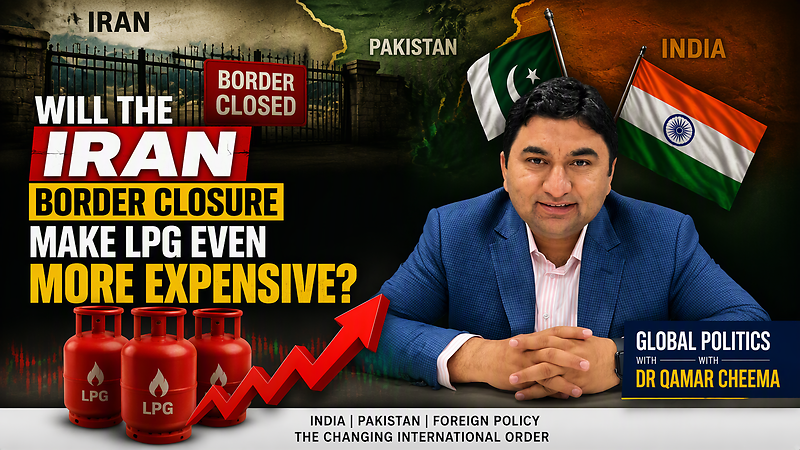
The recent closure of the Iran-Pakistan border has ignited a heated debate among analysts and commentators regarding its implications for energy supplies and geopolitical dynamics. Two distinct perspectives emerge, with some viewing the move as a pressure tactic and others as a significant energy threat.
Dr Qamar Cheema, a prominent commentator on global politics, presents a nuanced view in his video discussing the impact of the border closure on Pakistan's liquefied petroleum gas (LPG) market. He notes that Pakistan consumes approximately two million tonnes of LPG annually, with half of that supply—around one million tonnes—coming from Iranian routes. However, he emphasizes that LPG constitutes only 1.6% of Pakistan's total primary energy consumption. He argues that while Iran's role in Pakistan's energy mix is notable, the overall impact of the border closure may lead to market panic rather than a direct energy crisis. Cheema states, "LPG forms only 1.6% of Pakistan’s primary energy consumption," suggesting that the closure might not immediately threaten energy stability but could incite fear in the market.
In a separate analysis, Dr Cheema further elaborates on Iran's geopolitical motivations in another video. He claims that Iran's decision to halt a Pakistan-bound tanker following the border closure sends a clear message: Iran may restrict gas and LNG supplies to Pakistan as a form of pressure. He argues, "Iran may restrict Pakistan’s gas, LNG and LPG supplies as pressure," indicating that this tactic could be part of a broader strategy to assert influence over Pakistan amidst rising tensions. Cheema also critiques Iran's political leadership, suggesting that their inability to engage effectively with Pakistan and the West could lead to further complications in bilateral relations.
While both perspectives originate from Dr Cheema, they highlight the complexity of the situation. On one hand, he acknowledges the relatively small role of LPG in Pakistan's energy landscape; on the other, he warns that the geopolitical implications of the closure could have far-reaching consequences. This duality underscores the debate about whether the border closure is primarily a strategic maneuver by Iran or a legitimate threat to Pakistan's energy security.
The underlying tension in this discussion reflects broader regional dynamics, where energy dependence and political maneuvering often intersect. As both nations navigate their complex relationship, the implications of the border closure will likely continue to unfold, influencing energy markets and geopolitical alliances in the region. The outcome of this situation remains uncertain, but the stakes for both Iran and Pakistan are undeniably high.