Iran's Strategy: Resistance or Hegemony Amidst Regional Tensions?
Nov 2, 2026, 20:30 IST
Summary
The debate on Iran's regional strategy reveals contrasting perspectives. Dr. Qamar Cheema argues that Iran prolongs its standoff with the U.S. as punishment and supports non-state actors. The Khanversation channel highlights Iran's rising power, while Major Gaurav Arya emphasizes internal conflicts in the Middle East. Together, these views illustrate the complexities of Iran's role in regional tensions.
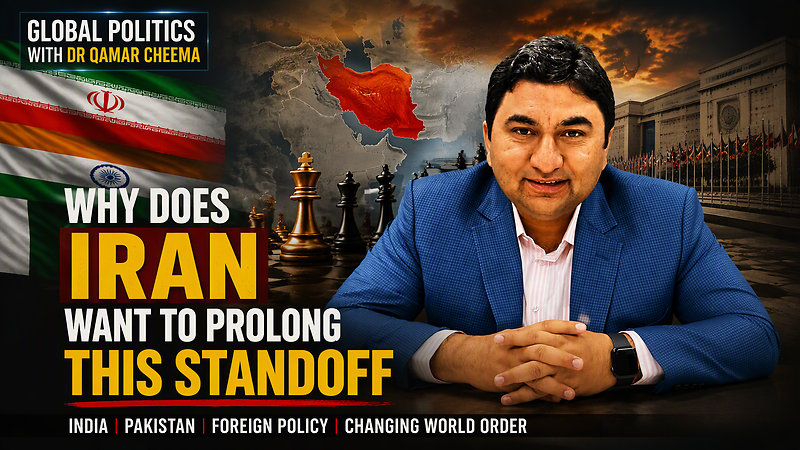
The debate surrounding Iran's regional strategy has intensified, with content creators offering differing views on whether the country is pursuing resistance, hegemony, or escalating confrontation. Dr. Qamar Cheema, a commentator on global politics, argues that Iran is deliberately prolonging its standoff with the United States as a means of punishment. He claims, 'Iranian leaders secretly use the Houthis while publicly denying responsibility,' suggesting that Iran's leadership believes they are justified in their actions due to past grievances with the U.S. He emphasizes the deep historical, cultural, and societal ties between Pakistan and Iran, despite existing disagreements.
In contrast, the Khanversation Original Channel presents a view that highlights Iran's rising power in the region. The creator asserts that the recent visit of Saudi officials to Tehran signifies Iran's increasing strength, stating, 'If Iran were not powerful, these countries wouldn't bother going to Tehran.' They argue that Iran's military capabilities have inflicted significant damage on Gulf infrastructure, thus undermining the perception of security in the region. The creator further notes that the Mecca defense pact reflects Arab nations' doubts about U.S. commitment to their security.
Major Gaurav Arya from The Chanakya Dialogues adds another layer to the discussion by asserting that the Middle East is rife with internal conflicts that persist even without U.S. or Israeli attacks. He states, 'Middle Eastern actors are fighting one another,' pointing to a long history of rivalries within the region. Arya argues that these conflicts are often framed through the lens of external threats, such as the Jewish state, to justify local hostilities.
Returning to Dr. Cheema's perspective, he emphasizes the inevitability of an Iran-U.S. war, claiming, 'Nobody can stop it.' He warns that Saudi Arabia and the UAE will never accept Iranian hegemony, indicating a clear opposition to Iran's regional ambitions. Cheema also critiques Iran's support for non-state actors, suggesting that this strategy is counterproductive and could ultimately harm Iran's relationships, including with Pakistan.
This sentiment resonates with the broader concerns regarding Iran's tactics. The Khanversation Original Channel and Dr. Cheema both recognize that Iran's actions, whether through direct confrontation or proxy warfare, could lead to heightened tensions in the region. However, while Cheema sees these actions as a sign of inevitable conflict, the Khanversation creator frames them as a strategic assertion of power in response to perceived threats.
In conclusion, the debate encapsulates a spectrum of views on Iran's intentions and strategies in the Middle East. From the perspectives of regional strength and internal conflict to the inevitability of confrontation, the discourse reflects the complexities of Iran's role in a volatile landscape. As these voices clash, it becomes clear that understanding Iran's regional strategy requires a nuanced examination of both historical grievances and current geopolitical realities.