Is India's Inflation Data Painting an Inaccurate Picture?
Aug 16, 2026, 16:18 IST
Summary
The debate on whether India's inflation is understated features diverse perspectives. Neha Nagar highlights lifestyle inflation among young professionals, while Bhagyashree Thakkar discusses rising consumer prices due to economic pressures. Sarthak Ahuja criticizes the government's inflation data, suggesting personal rates are much higher, and Saurabh Shukla points to regional disparities in inflation rates across the country.
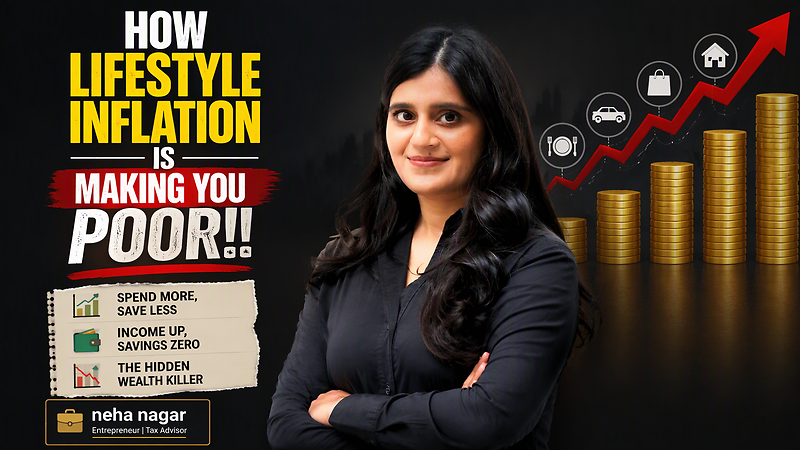
The question of whether India's inflation is understated has sparked a lively debate among various content creators. Neha Nagar, a popular YouTuber, argues that despite earning substantial salaries, young urban professionals often find themselves with little left at the end of the month. She observes that people earning ₹300,000 monthly still struggle financially, attributing this to lifestyle inflation driven by a fear of missing out (FOMO). According to Nagar, these individuals are compressing decades of experiences into just a few years, leading to excessive spending on luxury items such as hotels, vacations, and cars.
In contrast, financial analyst Bhagyashree Thakkar discusses the broader economic pressures that are pushing consumer goods prices higher. She highlights that from August, prices for essential items such as packaged tea and smartphones are expected to rise between 4% and 8% due to rising crude oil prices, shipping costs, and a depreciating rupee. Thakkar emphasizes the real costs faced by consumers, noting that businesses may struggle to absorb these increases and will likely pass them onto consumers.
Sarthak Ahuja, another financial commentator, takes a critical stance on the government's official inflation figures. He cites significant price hikes for essential commodities, including an 83% increase in ginger and 35% in garlic over the past year. Ahuja argues that the inflation rate in major metropolitan areas could be as high as 15%, far exceeding the official rate of 4.5%. He suggests that individuals in these regions are living in a bubble where premium products dominate, leading to a personal inflation rate that reflects their unique spending habits rather than the national average.
Adding to this perspective, Saurabh Shukla points out regional disparities in inflation rates across India. He notes that Telangana has recorded the highest retail inflation, followed by states like Andhra Pradesh and Tamil Nadu, while areas such as Delhi and Mizoram experience comparatively lower rates. Shukla emphasizes that the inflation landscape is not uniform and highlights significant increases in prices for vegetables, fruits, and transportation.
The debate reveals a complex interplay between personal financial experiences and macroeconomic trends. While Nagar's insights reflect the personal struggles of young professionals, Thakkar, Ahuja, and Shukla provide a broader economic context that suggests the official inflation figures may not capture the full extent of financial pressures faced by consumers across different regions. Together, these perspectives illustrate a nuanced picture of India's inflation landscape, suggesting that the official data may indeed be understated, particularly for those in urban centres who experience inflation differently than the national average.