Is the Free UPI Era Coming to an End?
Oct 13, 2026, 19:30 IST
Summary
The debate over the future of UPI in India intensifies as proposals to introduce fees for transactions over ₹2,000 emerge. Creators like Udayan Adhye and Shashank Udupa express concerns about costs being passed to consumers, while Ankit Inspires India suggests US pressure is influencing these changes. Faye D'Souza notes the postponement of fees until after Diwali, highlighting economic pressures.
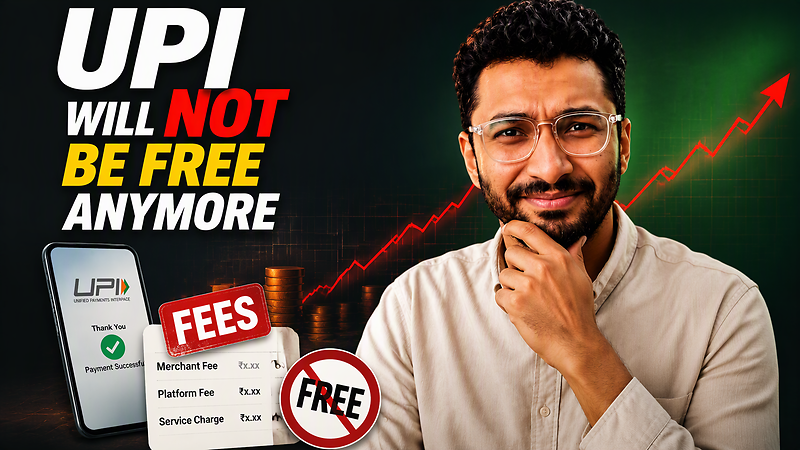
The debate surrounding the future of the Unified Payments Interface (UPI) in India has intensified, particularly with new government proposals that may introduce fees for certain transactions. Udayan Adhye, a popular content creator, argues in his video 'UPI will NOT be free anymore...' that starting from October 15, 2026, UPI merchant payments exceeding ₹2,000 will incur a 0.4% Merchant Discount Rate (MDR). He explains that while person-to-person transfers will remain free, merchants may pass on these costs to consumers, effectively increasing prices.
In another video titled 'UPI may not be free anymore?', Adhye highlights a proposed bill by Finance Minister Nirmala Sitharaman that removes the zero-MDR protection for UPI payments. He notes that while the bill does not specify any fees or rates, it empowers the government to set future charges, which could significantly impact user adoption of UPI. He cites a LocalCircles survey revealing that 53% of respondents would stop using UPI if fees were introduced.
Adding to the discourse, CA Bhagyashree Thakkar in 'End of Free UPI?' discusses the implications of a proposed amendment that could impose MDR charges. She points out that while small payments and person-to-person transfers are expected to remain free, high-value transactions may see fees passed indirectly to customers, depending on merchant practices.
Shashank Udupa, in his short video 'UPI Was Free. That's About to Change', expresses concern that the new fees could push consumers back to cash transactions. He argues that while UPI has been successful in reducing cash dependency, the introduction of fees might reverse this trend, raising questions about the rationale behind the government's decision to charge for a service that has been functioning well.
On the political front, Ankit Inspires India, in two separate videos titled 'UPI अब फ्री नहीं!' and 'UPI No Longer Free?', claims that the government is under pressure from the United States to impose fees on UPI transactions to protect American payment giants like Visa and Mastercard. He suggests that this move compromises the initial promise of a free UPI service, framing it as a surrender to foreign interests.
Ulta Chasma's Pragya Mishra echoes similar sentiments in her video 'UPI पेमेंट पर लगेगा चार्ज !', emphasizing that the government has confirmed charges for transactions over ₹2,000. She warns consumers to be mindful of their spending to avoid these new fees, which she believes will be passed on by merchants.
Ruhez Amrelia, in 'UPI Will Charge You 🤯 New Govt Rule', clarifies that while the fees will apply to merchants, they are likely to pass these costs onto consumers, raising concerns about the transparency of such charges.
Faye D'Souza, in her video 'UPI Charges Postponed. So What’s the Bad News?', notes that the implementation of these charges has been postponed until after Diwali. She argues that this delay indicates the government’s awareness of the financial strain on households, suggesting that the potential introduction of fees may exacerbate existing economic pressures during the festive season.
The perspectives highlight a significant divide in the community. Some creators warn of the negative impacts of introducing fees, while others frame it as a necessary adjustment to sustain the UPI ecosystem. As the debate continues, the consensus remains that the future of UPI, particularly regarding fees, is uncertain and potentially fraught with implications for both consumers and merchants alike.