Jio's Impact: Digital Revolution or Telecom Monopoly?
Oct 21, 2026, 20:17 IST
Summary
The debate over Jio's impact on India's digital landscape features diverse perspectives. Archit Vats praises Jio for making internet access affordable, while Tanay Tiwari links it to a cultural shift in cricket viewership. Sanjay Kathuria highlights Jio's role in economic growth through reduced data costs, and Peepoye Akassh Ashok Gupta emphasizes its rapid subscriber growth, questioning whether Jio's dominance benefits consumers or the corporation more.
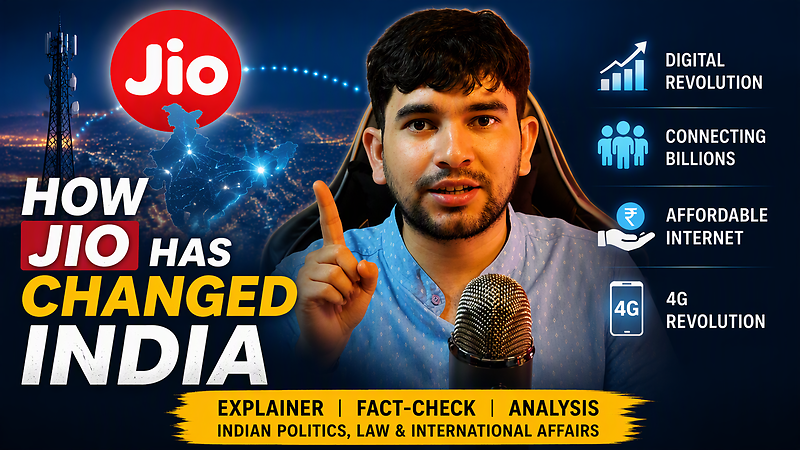
The debate surrounding Jio's transformation of India into a digital powerhouse is heated, with voices both praising and critiquing its impact. Digital Indian Archit Vats argues that Jio's entry into the market revolutionised internet accessibility, stating that 'Jio's entry and competition made affordable internet part of daily Indian life.' He highlights the staggering drop in the price of 1GB of data from ₹228 in 2016 to below ₹8 today, enabling small-town creators to reach audiences across the country. This affordability, he claims, has allowed talent from rural areas to flourish, making digital content creation more inclusive.
On the other hand, Tanay Tiwari connects Jio's launch to a significant cultural shift in how Indians consume sports, particularly cricket. He reminisces about the days before Jio, when accessing cricket matches was a luxury. 'Before Jio, Indian viewers paid ₹300–350 monthly for only 1–1.5GB data,' he explains, noting that Jio's arrival allowed fans to watch matches live on their phones. Tiwari suggests that this accessibility has transformed cricket fandom in India, making it more widespread.
Meanwhile, Sanjay Kathuria presents a broader economic perspective, asserting that Jio's pricing strategy triggered a price war that drastically reduced mobile data costs by 95% by 2018. He cites data consumption skyrocketing from 83 crore GB in 2014 to over 4600 crore GB in 2018, illustrating how affordable internet has spurred economic growth. He notes, 'Affordable internet has helped expand the market, benefiting not just telecom companies but also small businesses and gig workers.'
In a similar vein, Peepoye Akassh Ashok Gupta emphasises the sheer scale of Jio's subscriber growth, reporting that the company gained 100 million users within just 170 days of its launch. He claims that this rapid adoption is unprecedented in India, stating, 'Jio has made 1GB data prices fall from ₹225 to about ₹7.90 today.' Gupta underscores that this shift has fundamentally changed the telecommunications landscape in India.
While these creators largely agree on the transformative effects of Jio on data pricing and accessibility, there is an underlying tension regarding who ultimately benefits from this digital revolution. While Vats and Kathuria focus on the empowerment of creators and the economic expansion that affordable internet has fostered, Tiwari and Gupta highlight the cultural and consumer aspects, pointing to a shift in entertainment consumption patterns.
As the debate continues, the question remains: has Jio's dominance in the telecom market truly fostered a digital revolution, or has it simply established a monopoly that benefits the corporation more than the average consumer? This discussion reflects the complexities of technological advancement in a rapidly changing society, illustrating both the opportunities and challenges presented by Jio's ascent.