Jobless and Angry: The Clash Over India's Youth Unemployment Crisis
Nov 4, 2026, 11:13 IST
Summary
The debate over India's youth unemployment crisis reveals deep frustrations. Rahul Gandhi claims all employment doors are closed, while The Wire highlights systemic failures and rampant exam leaks. The Quint notes one in three young Indians is unemployed, with significant gender disparities. As protests grow, commentators stress the need for fair access to jobs and accountability from the government.
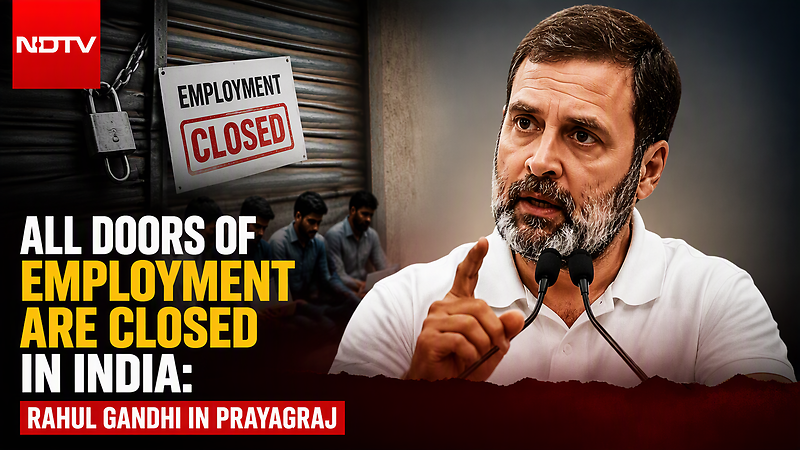
The youth unemployment crisis in India has sparked intense debate among various commentators, highlighting differing views on the causes and implications of this pressing issue. Prominent figures like Rahul Gandhi, in a recent address covered by NDTV, lamented that 'all doors of employment are closed in India,' emphasizing the frustration of educated youth who find themselves without job opportunities despite their hard work and financial investment in education.
In a related discussion, The Wire reported on a gathering of Congress-linked youth in Prayagraj, where they voiced their concerns about job scarcity and the rampant issue of exam leaks. The gathering featured posters demanding 'real jobs' and highlighted the lack of transparency in the examination process for government positions, which has led to widespread disillusionment among students.
The Wire further elaborated on the systemic failures over the past 11 years, noting that 'the government failed to create a system that could provide jobs for students.' With approximately 22.8 lakh students competing for just 1.25 lakh government job vacancies, the disparity is alarming. The commentator stressed that without adequate non-government jobs, the situation for youth is dire.
Adding to the urgency, The Quint revealed that one in three young Indians aged 15 to 29 is unemployed, based on government data. This statistic underscores the severity of the issue, with a notable gender gap: only 8% of young men fall into the 'not in education, employment, or training' (NEET) category, compared to a staggering 48% of young women. The Quint argues that the lack of job opportunities, particularly for women, is exacerbated by social pressures and discrimination.
In a more localized context, a youth from Jharkhand shared his perspective on the 'trap of unemployment.' He expressed frustration over repeated exam leaks and the uncertainty that leaves poor students in a cycle of preparation without any assurance of success. His experiences reflect a broader sentiment of despair among youth who feel trapped in a flawed system that does not reward merit.
Business Standard highlighted that the ongoing student protests are not just about job availability but also about the integrity of meritocracy itself. The protests stem from a desire for fair access to job opportunities and a transparent system. The commentator noted that while digital governance has improved, its effectiveness and responsiveness still fall short.
Meanwhile, India Today pointed out that the youth unemployment rate stands at 12%, with graduate unemployment reaching 20%. The commentator emphasized that the protests reflect a deeper frustration with the government's inability to provide sufficient job opportunities, exacerbated by issues like paper leaks.
P. Chidambaram, speaking on India Today, further criticized the quality of education, claiming it leaves many young people unemployable. He highlighted the stagnation in wages despite economic growth, questioning why young graduates struggle to secure stable employment.
The debate surrounding youth unemployment in India illustrates a complex interplay of systemic failures, societal expectations, and the urgent need for reform. As various voices emerge, the call for accountability and change grows louder, indicating that the youth are no longer willing to accept a future of uncertainty and despair.