Reopening Trade with China: A Pragmatic Shift or Economic Capture?
Nov 5, 2026, 21:56 IST
Summary
The reopening of trade routes between India and China has sparked debate on its implications. Sanjay Kathuria views it as a pragmatic step towards stability, while Abhijit Chavda questions its significance amid ongoing border tensions. Dr. Qamar Cheema emphasizes the potential for Chinese investment, contrasting with Shubhankar Mishra's concerns about economic capture in sensitive sectors.
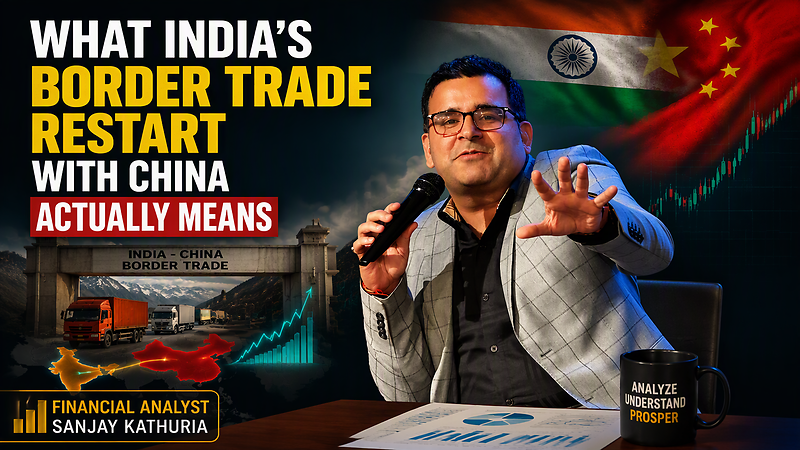
The recent reopening of trade routes between India and China has ignited a heated debate among various commentators regarding its implications. On August 1, 2023, India and China reopened three Himalayan passes—Nathula, Lipulekh, and Shipkila—after six years of closure. This move has been interpreted differently by different voices in the discourse.
Sanjay Kathuria, a commentator who focuses on economic analysis, suggests that this reopening is a significant step towards normalising relations between the two nations. He argues that the resumption of border trade is not merely a local issue but has broader economic implications. He notes, "Local traders can exchange traditional goods, capped at ₹100,000 daily until snowfall," and emphasizes that this limited trade could signal a thaw in relations ahead of the upcoming BRICS summit, potentially encouraging foreign investment. Kathuria posits that while the trade is small, it represents a shift towards stability, which is crucial for attracting investors.
Contrastingly, Abhijit Chavda, a political analyst, expresses skepticism about the significance of this trade reopening. He points out that some media outlets have exaggerated its importance, calling it a revival of the Silk Route. Chavda states, "This is not new news... This is a delivery. This is by no means a surprise." He highlights that the core issue between India and China remains the undemarcated border, which complicates any notion of a genuine rapprochement. Chavda argues that any improvement in relations is driven more by external pressures, particularly from the United States, rather than genuine goodwill from China.
In a different vein, Dr. Qamar Cheema, a geopolitical analyst, underscores the potential for significant Chinese investments in India during the BRICS summit. He argues that "Chinese investment is necessary to pressure the United States," suggesting that India's shifting stance towards China is strategic. Cheema posits that the Modi administration is reconsidering its relationship with China, which could lead to a new framework for business exchanges.
However, Shubhankar Mishra, a commentator on economic affairs, raises concerns about the implications of increased Chinese investment in Indian startups. He notes that many Indian startups, such as Paytm and Ola, have Chinese investments, which could lead to economic capture. Mishra acknowledges the need for investment but warns that sensitive sectors require caution. He states, "If it comes to consumer sectors, we have no problem, but in strategic areas, we must be careful."
This debate encapsulates the tension between pragmatism and caution in India's approach to China. While some view the reopening of trade as a pragmatic step towards improving relations and boosting the economy, others caution against potential economic capture and the need for vigilance in strategic sectors. The upcoming BRICS summit will likely serve as a crucial test for these evolving dynamics, as both nations navigate the complexities of their relationship amidst external pressures and domestic considerations.