The Price of Private Equity in Schools and Hospitals: Who Really Pays?
Nov 2, 2026, 14:37 IST
Summary
The debate on private equity in schools and hospitals reveals differing perspectives on financial burdens. Neha Nagar warns against high preschool fees, while Ajit Anjum highlights the struggles of parents like Ramabai Ranbir. Pooja Prasanna and CA Bhagyashree Thakkar discuss the implications of private equity in healthcare, emphasizing profit motives that may compromise patient welfare and accessibility.
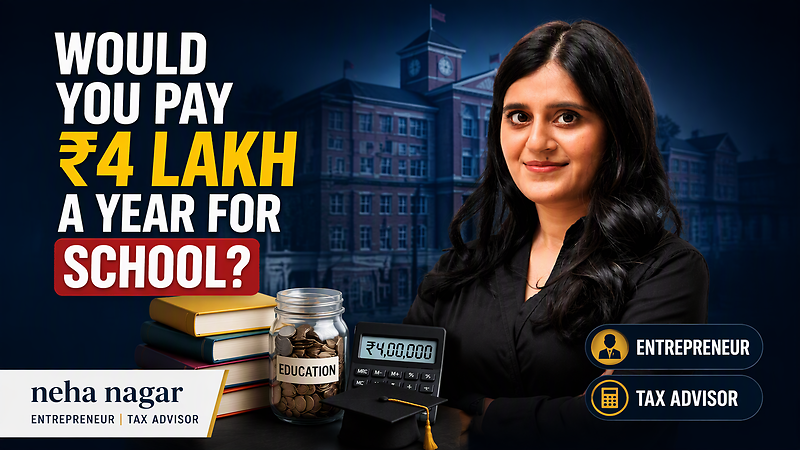
The debate surrounding private equity investment in schools and hospitals raises critical questions about who bears the financial burden. Neha Nagar, a popular YouTuber, highlights the alarming trend of exorbitant preschool fees, suggesting that the ₹4 lakh annual fee is pushing parents beyond their means. She asserts, 'Parents should maintain emergency funds before having children, regardless of parenthood,' warning against the status game in education that can create financial strain. Nagar argues that there are affordable educational options in India, emphasizing that quality education is not solely tied to high fees.
In contrast, Ajit Anjum, another influential voice in this discussion, presents a stark narrative of desperation. He recounts the story of Ramabai Ranbir, a mother who ran barefoot to earn money for her daughter's school fees, saying, 'If a mother has to run barefoot to pay her daughter’s fees, what does that say about our society?' Anjum critiques the government's role, stating that they celebrate failures as achievements while ignoring the struggles of families like Ramabai's. He calls for a deeper examination of the systemic issues that lead to such financial hardships.
Pooja Prasanna, a healthcare analyst, delves into the implications of private equity in hospitals, revealing that firms like Blackstone and KKR have invested ₹20,000 crore in Kerala's healthcare sector. She warns that while private equity can enhance the quality of care, it often prioritizes profit over patient welfare. Citing a Harvard study, Prasanna notes a concerning 13% increase in mortality rates in private-equity-funded hospitals, highlighting the potential dangers of profit-driven healthcare. She raises the ethical question of whether hospitals are becoming mere profit-generating entities rather than places of healing.
Adding to this, CA Bhagyashree Thakkar underscores the vast scale of foreign investment in Indian healthcare, noting over $1 billion invested in the last five years. She points out the stark disparity in hospital beds available per capita in India compared to developed countries, arguing that medical inflation and skyrocketing treatment costs are leaving the middle class in a precarious position. Thakkar emphasizes, 'If the system guarantees returns for investors while raising healthcare costs, we must question whether we are building hospitals for patients or merely converting them into profitable business models.'
The perspectives converge on the concern that private equity, while potentially beneficial in some aspects, poses significant risks to the accessibility and quality of education and healthcare. Nagar's emphasis on affordable education aligns with Anjum's call for systemic change, while Prasanna and Thakkar highlight the ethical dilemmas in healthcare. Together, these voices paint a complex picture of a system where profit motives often overshadow the fundamental need for accessible and quality education and healthcare, leaving many to wonder: who truly pays the price for private equity in these essential sectors?