Trump's Power Post-Election: A Divided Debate
Nov 25, 2026, 21:30 IST
Summary
In the wake of the election, Dr. Qamar Cheema argues that Donald Trump's foreign policy power remains strong despite domestic setbacks, while Arfa Khanum Sherwani contends that Trump's legislative authority is weakened. The debate centers on whether Trump can maintain his influence or if his opponents will gain the upper hand in shaping policy.
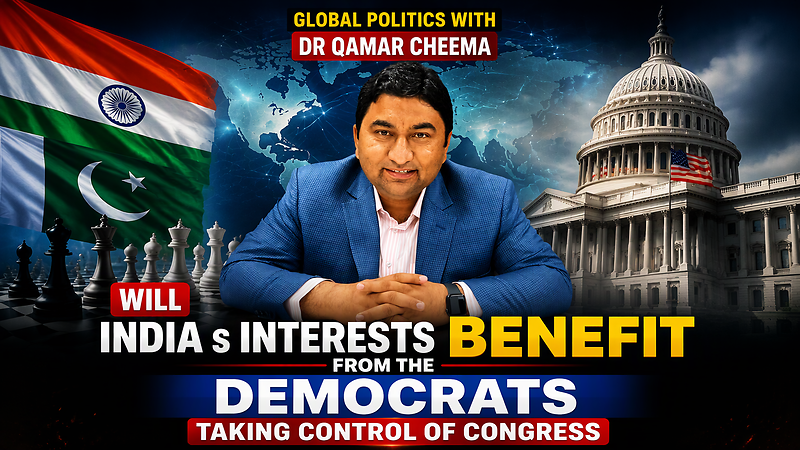
The aftermath of the recent election has sparked a heated debate about Donald Trump's remaining influence in American politics. Two prominent voices offer contrasting views on his power dynamics. Dr. Qamar Cheema, a commentator on global politics, argues that despite Trump's domestic setbacks, his foreign policy authority remains intact. He states, 'Donald Trump’s domestic weakness does not constrain his foreign-policy authority,' suggesting that Trump will continue to impose tough policies towards India and other countries. Cheema believes that if the Democrats take control of Congress, it could lead to better outcomes for India, indicating that Trump's foreign relations might be more challenging moving forward.
In stark contrast, Arfa Khanum Sherwani, a political commentator, emphasizes that Trump's recent electoral defeat has diminished his legislative power. She argues, 'Donald Trump’s November 3–4 election results create a major legislative challenge,' suggesting that he no longer has the free hand he once enjoyed. Sherwani posits that Trump's opponents will gain strength in the legislative arena, which could hinder his ability to enact policies effectively. She further speculates that Trump might resort to military action, such as starting a conflict with Iran, to distract from his political humiliation.
While both Cheema and Sherwani acknowledge the impact of the election on Trump, their interpretations diverge sharply. Cheema sees Trump's foreign policy as a realm where he can still exert significant influence, regardless of domestic challenges. He believes that Trump's approach will remain aggressive, especially towards countries like India, asserting that 'Trump will continue tough policies toward India and other countries.' Conversely, Sherwani sees a weakened Trump who might struggle to implement his agenda in the face of increased opposition, suggesting that his electoral loss will lead to a more complicated political landscape.
The debate highlights the complexities of Trump's position following the election setback. Cheema's perspective suggests that Trump's authority in foreign affairs will remain robust, while Sherwani's view raises concerns about his diminishing legislative power. As the political landscape continues to evolve, the question remains: how much power does Trump truly hold in this new chapter of American politics? The differing analyses reflect the ongoing uncertainty surrounding Trump's influence and the potential consequences for both domestic and foreign policy decisions.