Trump's Tariffs on India: Can a Trade Deal Still Save the Day?
Nov 5, 2026, 00:15 IST
Summary
The US's recent 10% tariff on Indian goods raises questions about a potential trade deal. Business Standard highlights India's policy changes that helped avoid a higher tariff, while India Today critiques Trump's approach as underestimating India's resilience. Nirmala Sitharaman notes negotiations have plateaued, contrasting with Marco Rubio's optimism about a nearing agreement. The debate continues amidst significant tariff threats.
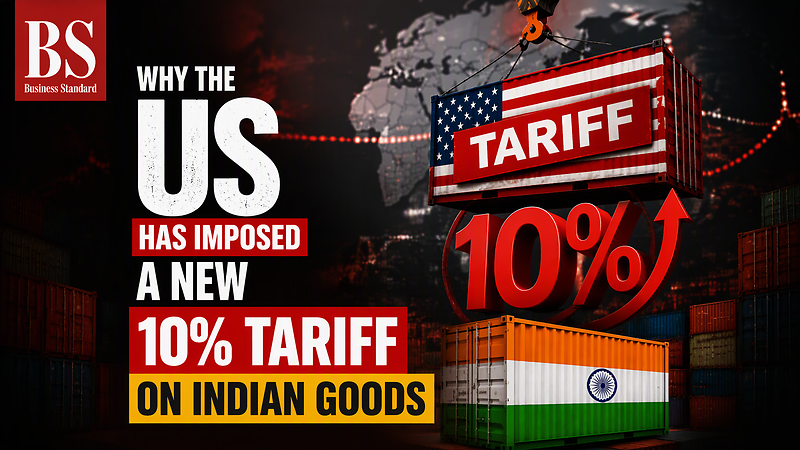
The recent imposition of a 10% tariff on Indian goods by the United States has ignited a fierce debate about the potential for a trade deal between the two nations. Business Standard reports that India managed to avoid a higher 12.5% tariff by amending its trade policies to ban imports made with forced labor. This change was pivotal as the US evaluated countries based on their compliance with labor standards. However, the additional tariff could still impact critical sectors in India, including textiles and engineering, which collectively exported over £87 billion to the US last year.
Conversely, India Today's analysis suggests that the Trump administration underestimates India's resilience and strategic alternatives. A former US commerce official claims that Trump's approach, likened to a 'real estate deal,' fails to grasp the depth of India's economic progress and its ability to pivot towards alternative markets, particularly following the global shifts due to the Ukraine conflict.
Anish Gawande, also from India Today, vehemently condemns the US's proposed 100% tariff threat against India, calling it a form of blackmail. He warns that such tariffs could devastate Indian farmers, particularly with ongoing discussions around soybean, corn, and dairy imports that could severely harm local agriculture.
In a more optimistic tone, Nirmala Sitharaman, India's Finance Minister, asserts that negotiations for a US-India trade agreement are ongoing but have reached a plateau, indicating that while progress has been made, further concessions may be challenging. However, Marco Rubio, the US Secretary of State, expresses a contrasting viewpoint, suggesting that the trade deal is 'incredibly close,' with only a few technical details left to finalize. He emphasizes the importance of a mutually beneficial agreement that addresses both nations' interests.
Despite the looming tariffs, Rubio's remarks indicate a cautious optimism about the negotiations. He notes that both sides are committed to finalizing an agreement that reflects their strategic partnership, particularly in commerce and defense. Trump has also hinted that the forthcoming trade deal with India will be unique, further adding to the anticipation surrounding the negotiations.
Yet, the threat of tariffs remains a significant hurdle. As Business Standard highlights, while negotiations are nearing completion, the impact of existing tariffs continues to cloud the future of India-US trade relations. The political signals may be positive, but clarity on tariff structures and market access is still awaited.
In conclusion, the debate over Trump's tariffs on India encapsulates a complex interplay of trade strategy, economic resilience, and diplomatic negotiations. With strong voices on both sides advocating for different approaches, the outcome remains uncertain as both nations navigate these turbulent waters.