UPI at 10: Balancing Digital Progress and Infrastructure Challenges
Sep 18, 2026, 06:50 IST
Summary
The debate surrounding India's UPI at its tenth anniversary highlights contrasting views on its digital success and operational costs. Sanjay Dixit emphasizes the impracticality of digital payments in rural areas, while Dhananjay Bhosale defends the fee structure for small transactions. Pranjal Kamra critiques the initial portrayal of UPI as a free service, arguing that fees may negatively impact merchants and consumers.
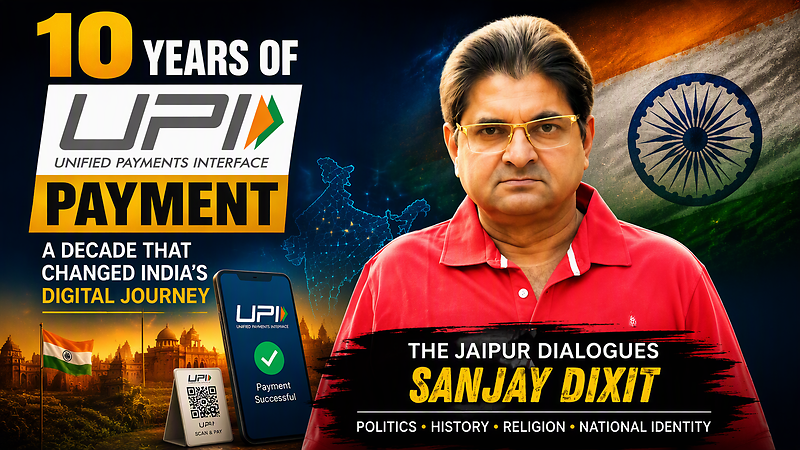
As India's Unified Payments Interface (UPI) celebrates its tenth anniversary, a heated debate unfolds about its successes and the costs associated with its operation. Key voices in this discussion include Sanjay Dixit, a popular YouTuber, who highlights the practical challenges of digital payments in rural areas, and Dhananjay Bhosale, another content creator, who addresses the implications of proposed transaction fees on UPI.
Sanjay Dixit argues that credit card payments are simply impractical for small purchases at village fairs. He states, "Go to your village fair. Buy potatoes and tomatoes and pay 7 rupees 50 paisa by credit card. What will the poor lady do?" He stresses that many rural vendors lack essential technology, such as POS machines, electricity, and internet connectivity. This sentiment is echoed in his other video, where he points out that even the Indian Parliament struggles with inadequate Wi-Fi, questioning how digital transactions can be expected to function effectively across the country without a robust digital infrastructure.
Contrasting Dixit's concerns about infrastructure, Dhananjay Bhosale presents a more optimistic view regarding UPI's fee structure. In his video, he assures viewers that personal UPI transactions remain free, and small merchants will not incur transaction fees for payments up to ₹2,000. He explains, "Small merchants...pay no MDR while receiving up to ₹1 lakh through UPI." However, he expresses concern that the government should not have introduced any charges, suggesting that many consumers would prefer cash over incurring additional costs.
Adding another layer to the discussion, Pranjal Kamra, a financial YouTuber, critiques the framing of UPI as a free service. He argues that the initial portrayal of UPI as a cost-free national infrastructure has led to backlash against the introduction of fees. He states, "UPI was presented as free, cash-equivalent infrastructure, creating backlash over proposed fees." Kamra suggests that these fees could squeeze merchant margins, ultimately affecting consumer prices. He also highlights that the infrastructure costs do not vary significantly with transaction amounts, making the ₹300 cap on fees excessive.
In summary, while Dixit emphasizes the need for improved digital infrastructure to support UPI's expansion, Bhosale reassures users of the continued free personal transactions. Meanwhile, Kamra urges a reconsideration of the fee structure, pointing out the misleading presentation of UPI's cost-free status. This multifaceted debate illustrates the complexities of scaling digital payments in India, weighing the successes of UPI against the real challenges faced by its users.
The clash of perspectives raises critical questions about the future of digital payments in India: Can UPI sustain its growth without significant investment in infrastructure? And how will the introduction of fees impact both merchants and consumers in the long run?