UPI Charges: A Burden or a Necessary Step?
Sep 25, 2026, 14:20 IST
Summary
The debate over UPI charges features opposition voices claiming it undermines India's digital payment ecosystem, while Finance Minister Nirmala Sitharaman defends it as necessary for sustainability. Critics like Saurabh Shukla argue the charges burden vulnerable groups, while proponents insist they are not taxes imposed by the government. The discussion reflects deeper concerns about taxation and social equity.
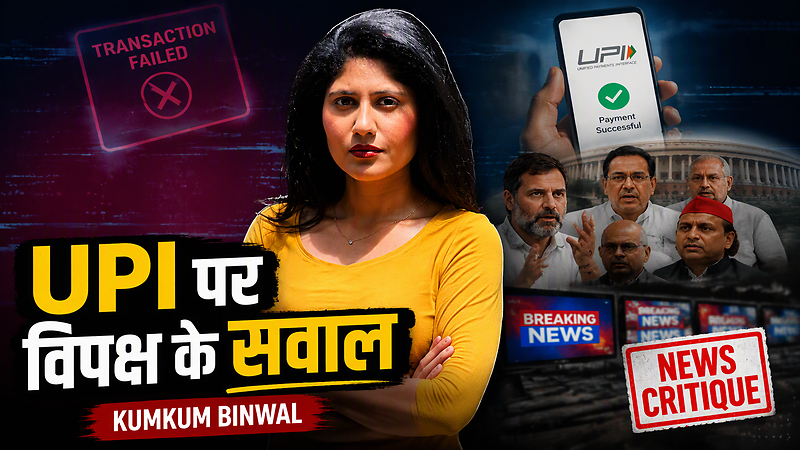
The debate surrounding the introduction of charges on Unified Payments Interface (UPI) transactions has intensified, pitting opposition voices against Finance Minister Nirmala Sitharaman's defense of the policy. The opposition claims that the charges undermine India's digital payment ecosystem, while the government argues they are necessary for sustainability.
Kumkum Binwal, a prominent Youtuber, asserts that these charges are a conspiracy to weaken India's homegrown UPI system under pressure from the United States. She claims, 'This is a plot to destroy our digital payment ecosystem. The middle class, as well as the lower middle class, will bear the brunt of these charges on payments above ₹2,000.' Binwal's argument emphasizes the detrimental impact on ordinary citizens, questioning the government's motivations.
Conversely, in another video, Kumkum Binwal clarifies the government's stance, stating that UPI charges will only apply to commercial transactions, not everyday users. She argues, 'UPI has been operating without charges as an experimental privilege. If there are some charges now, it’s not unreasonable as we need a sustainable business model.' This position indicates a nuanced understanding of the charges, framing them as a necessary adjustment rather than a punitive measure.
The red mike Saurabh Shukla, another influential Youtuber, takes a more critical view, arguing that the charges will disproportionately affect the youth, the poor, and marginalized groups. He states, 'If you conduct a ₹10,000 UPI transaction, you will pay a ₹40 charge. This collection is targeting the very people who were encouraged to use UPI in the first place.' Shukla's perspective reflects concerns about social equity and the potential economic burden on vulnerable populations.
Adding to the critique, Nimmo Tai expresses frustration with the broader taxation system, arguing that people are already taxed on their income and spending. He notes, 'You are taxing people for spending money they have already paid taxes on. Adding a tax on UPI transactions would leave little remaining for them.' This perspective highlights a growing sentiment that taxation is becoming increasingly burdensome.
On the other hand, Siddhant Agnihotri from Study Glows argues against the introduction of the Merchant Discount Rate (MDR), warning that it may lead to increased charges at petrol pumps and other businesses. He states, 'The middle class faces income tax, GST, vehicle tax, and tolls. Heavy taxation without free services could drive India's best brains abroad.' Agnihotri's argument underscores the potential negative ripple effects of these charges across the economy.
In defense of the new charges, Finance Minister Nirmala Sitharaman firmly states that the MDR is not a tax imposed by the government. She clarifies, 'This is not a tax, this is not a cess. The collection is not coming to the consolidated fund of India. It is paid by merchants for transactions above ₹2,000.' Sitharaman insists that the charges will not be passed on to consumers, countering claims made by opposition figures.
This debate showcases a complex interplay of perspectives, with some arguing for the necessity of UPI charges for sustainability, while others highlight the potential socioeconomic repercussions. As the discourse continues, the implications of these charges for India's digital economy and its citizens remain a contentious issue.