US Shifts Stance on Russian Diesel: A Political Gamble or Global Necessity?
Oct 14, 2026, 20:29 IST
Summary
The US's shift on Russian diesel sanctions has ignited debate. Sanjay Kathuria criticizes Trump for hypocrisy in negotiating diesel supplies after threatening sanctions, linking it to rising prices and political pressure. Faye D'Souza counters that the deal aims to benefit global markets, arguing it is not solely for the US. This disagreement highlights the tension between national interests and global responsibilities.
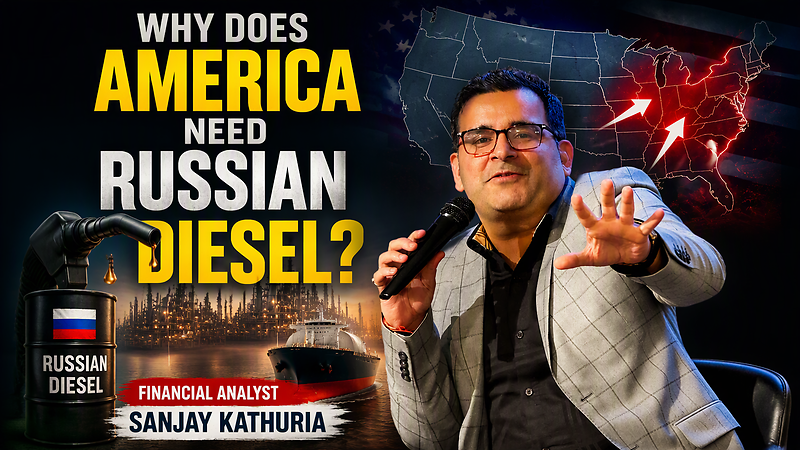
The recent shift in the United States' position on Russian diesel sanctions has sparked a heated debate among content creators. Popular YouTuber Sanjay Kathuria criticizes former President Donald Trump for negotiating Russian diesel supplies after previously threatening sanctions against buyers. He argues that Trump's actions are hypocritical, stating, "Trump threatened sanctions against Russian oil buyers, then negotiated Russian diesel supplies." Kathuria highlights the impact of disrupted diesel exports from Russia and China, pushing US prices to $6.5 per gallon. He connects this to the upcoming mid-term elections, suggesting that rising diesel prices could hurt Trump's popularity, thus prompting the deal with Russia.
In contrast, Faye D'Souza offers a different perspective on the situation, suggesting that the diesel deal is not primarily for the United States but rather to stabilize global markets. She quotes Trump, stating, "That's a diesel deal not for us. That's being released into the world." D'Souza points out that disrupted diesel refineries have caused high prices globally and argues that releasing Russian diesel would benefit the entire world’s market.
The two creators diverge significantly in their interpretations of the US's motivations. While Kathuria views the negotiation as a self-serving political move by Trump, D'Souza frames it as a necessary action to alleviate global economic strain. This disagreement highlights a critical nuance in the debate: is the US's new stance driven by internal political pressures or by a broader responsibility to the global market?
Kathuria further criticizes Trump’s suggestion to remove Ukrainian President Volodymyr Zelensky, arguing that this contradicts the US's earlier support for Ukraine against Russian aggression. He states, "Trump discussed removing Zelensky after negotiating Russian diesel supplies," underscoring a perceived inconsistency in US foreign policy. D'Souza, however, does not address this aspect directly, focusing instead on the potential benefits of the diesel deal for the world economy.
This debate encapsulates the tension between national interests and global responsibilities. While Kathuria sees the deal as a betrayal of previously stated US values, D'Souza emphasizes the need for a pragmatic approach to international relations. The discussion remains unresolved, with each creator providing compelling arguments that reflect the complexities of geopolitical dynamics and domestic politics surrounding the issue of Russian diesel sanctions.