Who Will Define the Multipolar World: The US, China, or India?
Nov 23, 2026, 22:30 IST
Summary
The debate over which nation will shape the emerging multipolar world features stark contrasts. Sanjay Dixit, a popular YouTuber, argues that the U.S. has lost its global anchor role, leading to instability. He discusses historical energy-based orders and acknowledges China's influence, while India's potential role remains a question. The future of global governance hangs in the balance.
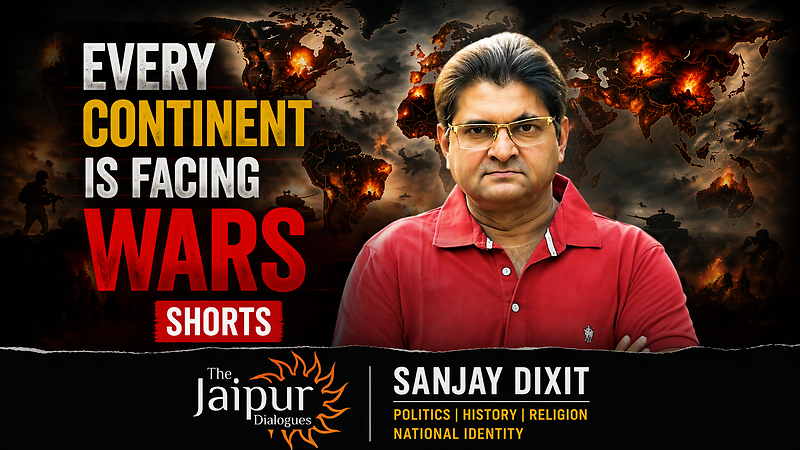
In the ongoing debate about which nation will shape the emerging multipolar world, the voices of content creators reveal starkly contrasting views. Sanjay Dixit, a popular YouTuber from The Jaipur Dialogues, argues emphatically that the United States has lost its role as the global anchor, leading to widespread instability across various regions. In his short video, "Every Continent Is Facing Wars!", he claims, "America no longer anchors the global order, leaving widespread conflicts and instability." He points to various ongoing conflicts, asserting that without a strong guiding power, the world is in chaos, exemplified by turmoil in regions like Asia and Europe.
Dixit further elaborates on this theme in another video, "Who Controls The Multipolar World?" Here, he outlines the historical context of the global order, stating that it was previously based on Middle Eastern energy and dollar transactions, which have now deteriorated. He explains, "The previous world order rested on Middle Eastern energy and dollar transactions," noting a significant decline in U.S. naval power from 800 destroyers to just 80, indicating a diminished ability to enforce this order.
In contrast, there is a growing sentiment among other commentators that China or India could take on a more significant role in this new multipolar landscape. While Dixit expresses skepticism about China's communist claims, arguing that it operates under a capitalist authoritarian system, he does not dismiss its potential influence. He acknowledges that China has adapted its governance to fit a capitalist framework, but he views this as a manipulation of communist ideals rather than an outright endorsement of its political structure.
The debate around India's role is less directly addressed by Dixit but is an underlying question in the discussion of multipolarity. Supporters of India's increasing influence argue that its democratic values and growing economy could position it as a stabilizing force in the multipolar world. However, Dixit's focus remains on the failures of existing powers rather than advocating for a specific country’s ascendance.
Overall, the contention lies in whether the existing global order can adapt or whether new powers like China and India will emerge to fill the void left by the United States. Dixit paints a picture of a world in disarray due to the absence of a singular guiding force, while also hinting at the complex dynamics that will shape future power structures. As the multipolar world evolves, the question remains: will it be defined by the remnants of U.S. influence, the rise of China, or the potential of India to establish itself as a key player? The answers to these questions will significantly impact global stability and governance in the coming years.