Delhi's Smog: Tradition or Immediate Action?
Oct 30, 2026, 15:50 IST
Summary
The debate on Delhi's pollution highlights tensions between tradition and environmental action. Harsh Vardhan Tripathi advocates for tree-planting initiatives to combat smog, while Luke Coutinho emphasizes the need for biodiversity and critiques pollution from festivals. Both agree on the urgency of action, yet differ on methods and implications for public health and cultural practices.
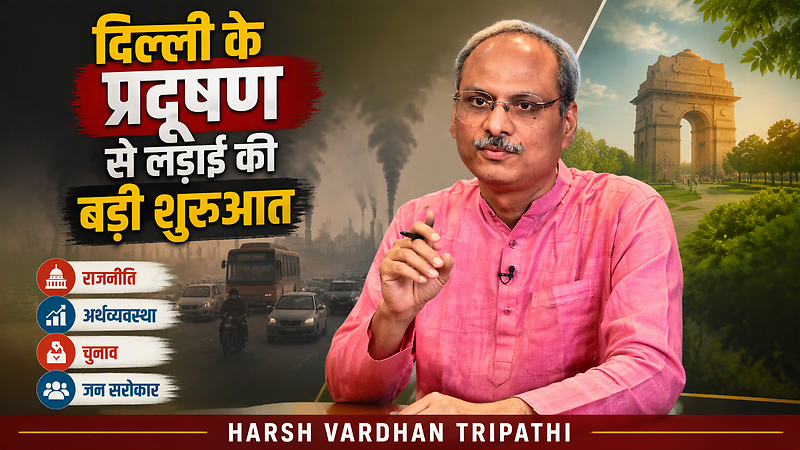
As Delhi grapples with severe air pollution, particularly during festival seasons, a heated debate emerges about balancing tradition with urgent environmental action. Harsh Vardhan Tripathi, a popular YouTuber, emphasizes the Indian government's initiative to plant over one crore indigenous trees in the Delhi Ridge area to combat pollution. He argues that this project, spearheaded by Home Minister Amit Shah, will replace foreign and harmful tree species with native varieties like neem and peepal, ultimately enhancing the region's biodiversity and environmental health. He highlights, 'Seventy lakh saplings will replace foreign trees with neem, peepal, banyan, jamun.' Tripathi's optimism contrasts sharply with concerns raised by fellow content creator Luke Coutinho, who insists that such efforts are insufficient if they overlook the importance of soil biodiversity and native species. Coutinho argues, 'Planting 5,000 trees can overlook native species and soil biodiversity,' stressing that environmental restoration must focus on diverse native species to truly benefit the ecosystem.
The discussion takes a darker turn when Coutinho addresses the pollution generated during festival celebrations, particularly in Mumbai. He notes that the air quality deteriorates significantly, leading to health issues for vulnerable populations. He expresses frustration over the contradiction of celebrating while simultaneously harming public health, stating, 'No celebration should leave a child suffering to breathe.' This sentiment resonates with Tripathi, who acknowledges the pollution from fireworks during Diwali but argues for a balanced approach that allows people to enjoy their traditions while minimizing environmental impact. He suggests, 'Early planning could reduce Delhi-NCR pollution from Diwali fireworks.'
While Tripathi calls for a nuanced understanding of festival practices, he also mentions the government's plans to impose stricter regulations during winter months, including a ban on construction and increased parking fees, to combat pollution. He argues that these measures, alongside the tree-planting initiative, are necessary steps towards a cleaner environment. However, Coutinho critiques the idea that temporary measures can address systemic issues. He points out that the Constitution of India protects citizens' rights to clean air and water, highlighting the irony of people needing to buy air purifiers while still paying taxes. He advocates for the abolition of GST on essential purifiers, arguing, 'Air and water shouldn't be privileges for the wealthy.'
The debate underscores a critical tension: how to respect cultural traditions while prioritizing immediate action against pollution. Tripathi and Coutinho agree on the necessity for action, yet they diverge on methods and implications. As the festival season approaches, the conversation around Delhi's smog and pollution intensifies, challenging both policymakers and citizens to find a way forward that honors traditions without compromising health and environmental integrity.