Gurugram Floods: Weather Woes or Planning Failures?
Sep 14, 2026, 17:53 IST
Summary
Gurugram's recurrent flooding raises questions about whether it's due to weather or failed urban planning. NDTV highlights systemic issues and failed promises, while BJP MP Rao Inderjit Singh attributes problems to past Congress-era developments. Commentators like Suhel Seth label the situation as administrative failure, calling for urgent reforms. The debate continues over accountability and solutions.
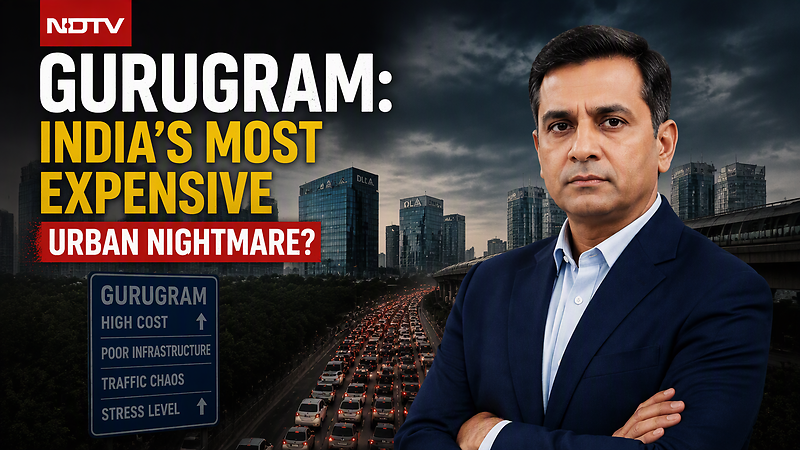
Gurugram's recurring floods have reignited a fierce debate about whether the chaos is due to natural weather patterns or systemic urban planning failures. Various voices weigh in, revealing a spectrum of opinions on the crisis.
NDTV highlights the dire situation in Gurugram, with one video describing it as 'India's Most Expensive Urban Nightmare.' The creator argues that the city suffers from daily traffic congestion, deteriorating roads, severe pollution, and inadequate public transport, all contributing to a poor quality of life despite soaring property prices. This perspective underscores the broader issues of urban mismanagement, suggesting that the floods are symptomatic of deeper infrastructural problems rather than just an unfortunate weather event.
In another NDTV segment, the focus shifts to the immediate consequences of the floods. The creator recounts a recent incident where 75 millimetres of rain left school buses stranded for hours, with children unable to return home safely. This incident starkly illustrates the failure of local governance, as repeated election promises for better drainage systems have not been fulfilled. The creator laments that such flooding should not be a seasonal crisis, calling for accountability from elected officials.
Contrasting this, BJP MP Rao Inderjit Singh defends the government’s record, asserting that urban development over the past twelve years has improved infrastructure significantly, despite ongoing flooding. He states, 'Gurugram has transformed from a village into a city,' emphasizing the government's commitment to development by 2047. However, critics challenge this timeline, arguing that waiting until 2047 for improvements is unacceptable.
Rao Inderjit Singh also shifts blame to past Congress-era development, which he claims obstructed traditional drainage systems. He advocates for the construction of underground tunnels to restore effective drainage, suggesting that current solutions are merely 'band-aid' fixes. This view highlights a division in responsibility between current and previous administrations, complicating the narrative surrounding the floods.
Suhel Seth, a prominent commentator, takes a more scathing view, arguing that the flooding is a clear failure of administration, not a mere consequence of rain. He criticizes local officials for their lack of preparedness and responsiveness, particularly in light of the suffering endured by schoolchildren during the floods. He asserts, 'Gurugram is a miserable city, not a Millennium City,' and calls for urgent reforms to address the systemic failures that lead to such crises.
Echoing this sentiment, another NDTV segment describes the phenomenon of 'flood tax,' where residents pay the price for inadequate infrastructure each monsoon season. The creator points out that despite high property taxes, Gurugram's roads regularly submerge, raising questions about government accountability and urban planning choices.
As the debate unfolds, the question remains: are Gurugram's floods a result of uncontrollable weather or a glaring failure of urban planning? The consensus among critics leans towards the latter, demanding immediate action from the government to prevent such disasters in the future.