Gurugram, Noida Airport, and Varanasi: Smart Cities or Water Cities?
Sep 15, 2026, 05:13 IST
Summary
The debate over Gurugram, Noida, and Varanasi's status as smart cities or water cities intensified following severe flooding. Abhisar Sharma criticized the BJP government's accountability, while Sakshi Joshi highlighted the need for direct aid for flood-affected areas. Barkha Dutt and Faye D'Souza raised concerns about urban planning failures and the implications of climate change, revealing a consensus on the need for better infrastructure.
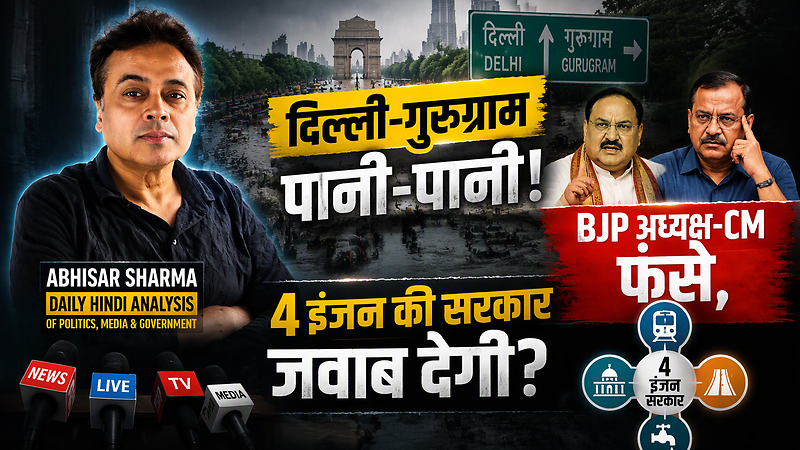
As heavy rains swept across northern India, the debate intensified over whether Gurugram, Noida, and Varanasi are truly smart cities or merely water cities. Popular YouTuber Abhisar Sharma highlighted the severe waterlogging in Delhi, Gurugram, and Noida, asserting that the BJP government has failed to provide accountability. He pointed to the embarrassing moment when BJP president Nitin Nabin and Delhi Chief Minister Rekha Gupta found themselves stranded at Talkatora Stadium due to flooding, illustrating the dire situation. Sharma remarked, 'Gurugram, which is supposed to be an IT hub, saw buses submerged in water.'
In contrast, Sakshi Joshi, a prominent YouTuber, focused on the broader implications of flooding, particularly in Bihar. She criticized the government for treating flood assessment as a mere formality and emphasized the urgent need for direct aid for the over 4.5 million people affected by floods in Bihar. Joshi's arguments resonate with those concerned about governmental inaction during natural disasters, underscoring a systemic issue across multiple states.
Adding to the discourse, Joshi also addressed the perennial flooding in Gurugram, which she described as an 'anti-national pit,' accusing the government of neglecting infrastructure planning. She noted that Gurugram's roads flood every monsoon, affecting school buses and daily commuters, while questioning the accountability of local leaders like Rao Inderjit Singh, who has served in various capacities since 2009.
Meanwhile, media publisher Mojo Story, represented by Barkha Dutt, reported on the newly opened Noida International Airport, which faced significant waterlogging just weeks after its inauguration. This raises questions about the efficacy of smart city developments, as Dutt pointed out that 'Gurugram floods repeatedly whenever it rains,' suggesting that these developments have not adequately addressed the underlying issues of urban planning and infrastructure resilience.
Faye D'Souza, another influential media figure, echoed similar sentiments regarding Varanasi, where rising Ganga waters have led to waterlogging due to heavy rainfall. Her observations highlight the urgent need for cities like Varanasi to reconsider their infrastructure in the face of climate change and increasing rainfall.
The varied perspectives reveal a consensus on one key issue: the current urban planning strategies in these regions are failing to address the realities of climate impacts and rainfall. While some creators like Sharma and Joshi focus on governmental accountability and infrastructure failures, others like Dutt and D'Souza emphasize the broader implications for urban development and climate resilience. The debate continues as cities grapple with the challenge of transforming into truly smart cities amidst these pressing water-related crises.