Himalayan Disasters: Reckless Development or Climate Fate?
Sep 7, 2026, 14:48 IST
Summary
The devastating floods in Nepal have sparked a debate over their causes, with Akash Banerjee attributing the disaster to a glacier collapse, while Sarthak Goswami links it to climate change. Faye D'Souza highlights UN warnings about future risks, and Pooja Prasanna raises accountability issues regarding local disaster management. Together, they call for urgent action to mitigate future disasters.
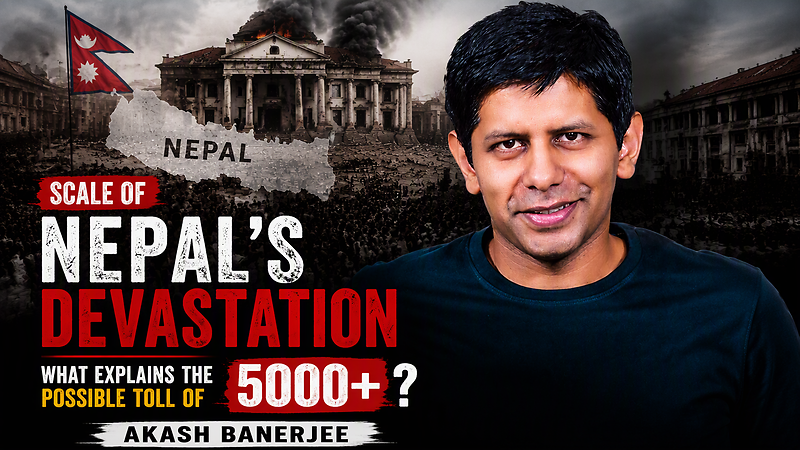
The recent catastrophic floods in Nepal have ignited a fierce debate surrounding the causes of such disasters, pitting climate change against reckless development. Popular YouTuber Akash Banerjee highlights a glacier collapse at 5,200 metres in Nepal, stating, 'A glacier collapse... breached a debris dam, unleashing a deadly flood.' He describes how this flood surged 1.5 miles upstream toward China, defying gravity, and resulted in widespread devastation. Banerjee emphasizes that the destruction was exacerbated by the failure of river gauges to provide timely warnings, which delayed the response for those downstream.
In contrast, fellow YouTuber Sarthak Goswami argues that the floods serve as a stark warning about climate change. He notes that over 600 people died and more than 3,000 are reported missing due to the disaster. He connects this incident to broader issues of global warming, asserting, 'These glaciers are melting... and it gives rise to a GLOF.' He raises alarms about the potential for similar disasters to impact cities in the Gangetic plains if climate change continues to be ignored.
Faye D'Souza, a journalist, adds to this perspective by citing the UN's warning that millions could be at risk from future glacial floods. She highlights the collapse near Langtang Lirung, noting, 'As glaciers melt, water can build up behind natural barriers... creating glacial lakes that can suddenly burst.' D'Souza stresses the urgent need for early warning systems to mitigate these risks, stating that the population at risk is now believed to be millions, especially as researchers have identified numerous potentially dangerous glacial lakes across the region.
While the focus remains on the environmental aspects, D'Souza also touches upon the human element, revealing that Nepal has already lost power capacity and that entire riverbanks may become uninhabitable. This assertion aligns with Banerjee's emphasis on the failure of infrastructure to withstand such disasters, yet D'Souza brings a more global perspective, indicating that this is a problem that transcends borders.
Amidst these discussions, Pooja Prasanna introduces a different angle by highlighting the accountability of local authorities in disaster management. She points out that officials in Wayanad had previously ordered soil and debris removal to prevent landslides, but contractors failed to comply with these directives. This raises questions about whether a lack of action at the local level contributed to the disaster, suggesting that human negligence may play a significant role in these events, alongside natural causes.
D'Souza's coverage of a Chinese national rescued from a hydropower tunnel affected by the floods underscores the cross-border implications of these disasters, linking local catastrophes to international concerns. While the narratives presented by Banerjee, Goswami, D'Souza, and Prasanna differ in focus, they collectively underscore the urgency of addressing both climate change and development practices to prevent future tragedies in the Himalayan region.