Is India Prepared for the Climate Crisis? A Divided Debate
Oct 23, 2026, 21:40 IST
Summary
The debate over India's readiness for the climate crisis features contrasting perspectives. The Wire argues that India cannot solve climate change alone and needs better infrastructure. NDTV highlights India's early achievement of renewable energy goals, while CNN News 18 critiques Europe’s historical emissions and calls out unfulfilled climate finance promises. Together, these voices illustrate the complexity of India's climate challenges.
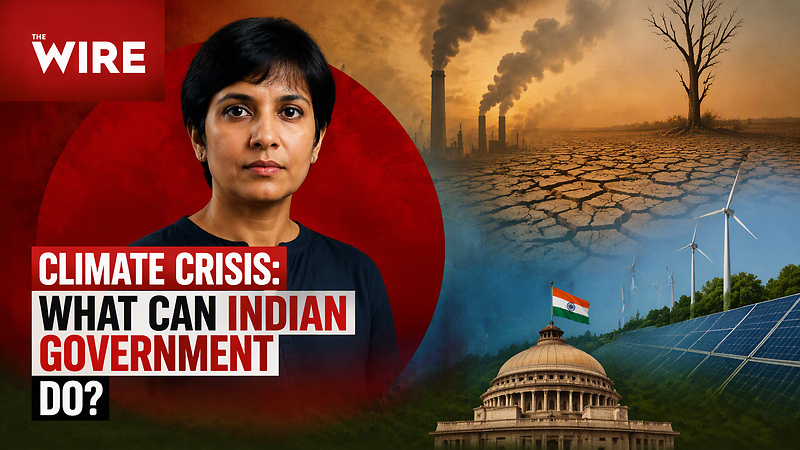
As India grapples with the escalating climate crisis, a contentious debate emerges over whether the government is adequately prepared to address the challenges ahead. Different voices present contrasting perspectives on the nation’s role and responsibility in mitigating climate change.
The Wire asserts that India cannot tackle the climate crisis alone, highlighting that the roots of the problem are largely global and historical. They argue, 'The Indian government must recognize that the climate crisis is a global issue, with causes that extend beyond its borders.' They emphasize the need for improved urban drainage systems to cope with extreme rainfall, citing the floods in Barmer that submerged the city for nearly three months. The Wire stresses, 'The government can no longer hide behind ignorance; it must act decisively to protect its citizens.'
In contrast, NDTV presents a more optimistic view of India’s progress in renewable energy. They report that Prime Minister Narendra Modi announced India achieved its goal of having 40% of its electricity capacity from non-fossil sources by November 2021, nine years ahead of schedule. Modi highlighted the increase in renewable energy capacity from 75 gigawatts in 2014 to 300 gigawatts, framing this achievement as a significant step towards a sustainable future. This success showcases India's commitment to addressing climate change, suggesting that the government is indeed taking proactive measures.
However, CNN News 18 challenges the narrative of responsibility and accountability in the climate crisis. Piyush Goyal, the Indian Minister of Commerce, vehemently criticizes Europe for its historical contributions to global emissions. He argues, 'You created this mess! You polluted the planet and now expect developing nations to bear the cost.' Goyal points out that India contributes only about 3% of global emissions despite housing 17% of the world’s population, contrasting this with Europe’s disproportionate historical emissions. He questions the fairness of wealthy nations lecturing India on climate action, stating, 'The countries that industrialized first cannot give lessons to India.' Goyal further highlights the unfulfilled promise of $100 billion in climate finance from developed nations, pressing the issue of accountability.
While The Wire emphasizes the urgent need for local government action to prepare for climate impacts, NDTV focuses on the progress made in renewable energy, showcasing India’s potential leadership in the transition to sustainable energy. Meanwhile, CNN News 18 brings attention to the inequities in global responsibility, suggesting that India’s challenges cannot be divorced from the historical context of climate change.
In conclusion, the debate over India’s readiness to confront the climate crisis reveals a complex landscape of opinions. Voices from The Wire, NDTV, and CNN News 18 collectively paint a picture of a nation at a crossroads, where local preparedness, global responsibility, and historical injustices intertwine in the fight against climate change.