Nepal's Glacier Flood: A Stark Warning for India's Vulnerable Himalayas
Sep 6, 2026, 07:07 IST
Summary
The Nepal glacier flood disaster has sparked urgent debate about its implications for India's Himalayas. NDTV warns of vulnerable glacial lakes, while The Wire emphasizes the complexities of linking such disasters to climate change. Business Standard highlights the risk of ice-rock avalanches, and India Today identifies specific regions at risk, all stressing the need for preparedness and early warning systems.
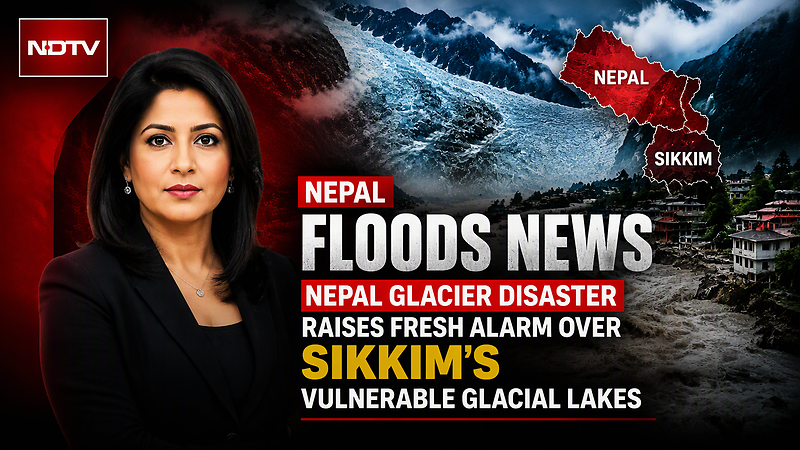
The recent glacier flood disaster in Nepal has ignited a critical debate about the implications for India's Himalayan regions. Multiple voices in the discourse are raising alarms over the potential for similar catastrophes to occur in India, each contributing unique insights into the underlying causes and necessary responses.
NDTV highlights the urgency of the situation, stating, "A UN-led study identified 407 glacial lakes vulnerable to outburst floods across the Himalayas." The report indicates that in Sikkim alone, 85 glacial lakes have been surveyed, revealing that 17 are highly vulnerable, with seven at risk of bursting due to seismic activity or heavy rainfall. The network points out that authorities have installed sensors across glaciers and rivers to provide early warnings, underlining the need for proactive measures in the face of increasing glacial melt.
Contrasting this perspective, The Wire delves into the complexities of attributing the recent disaster to climate change. A representative argues, "Attributing disasters to climate change requires long-term regional observations," emphasizing that the link is not straightforward. They elaborate on how rising temperatures on the Tibetan Plateau are leading to accelerated glacier retreat and changing precipitation patterns, which may ultimately expose glaciers to conditions that could increase the likelihood of floods.
Business Standard echoes the alarm, warning that the Nepal floods serve as a chilling reminder for India. They explain that an ice-rock avalanche triggered by glacier collapse could lead to catastrophic events similar to those witnessed in Nepal. The publication points out that there are 219 identified hanging glaciers in Uttarakhand's Alaknanda basin, with projections indicating a 120% increase in human exposure to avalanche flows by 2030, raising the stakes for disaster preparedness.
India Today adds to the conversation by focusing on specific regions at risk. They highlight Sikkim’s South Lhonak Lake as a significant threat, indicating that the potential for flooding extends into densely populated areas like Darjeeling and Bengal. Additionally, they reference a 2026 study that mapped 219 hanging glaciers in the Alaknanda basin, underscoring the dual threats of glacial lake outburst floods and ice avalanches.
The urgent tone is palpable across these perspectives, with India Today reiterating, "The warning directed at India is unmistakable. What happened across our border can happen in India, and unfortunately, very soon." This sentiment is echoed by other creators, who collectively stress the importance of preparedness and early warning systems in mitigating the risks posed by glacial melt and unstable ice formations.
In summary, while there is agreement on the dangers presented by Nepal’s glacier floods, the discussions reflect a nuanced understanding of the complexities involved in linking these events to climate change. The consensus is clear: India must heed the warnings and take immediate action to safeguard its vulnerable Himalayan regions from potential disasters.