Who Owns India's Air? The Blame Game on Pollution Intensifies
Nov 4, 2026, 20:00 IST
Summary
Delhi's pollution crisis sparks a heated debate over responsibility and government measures. Business Standard outlines a winter action plan with doubled parking fees and reduced office attendance. Minister Sirsa from India Today emphasizes strict adherence to pollution rules and the use of green crackers. The discussion highlights shared concerns but also raises questions about accountability in tackling air quality issues.
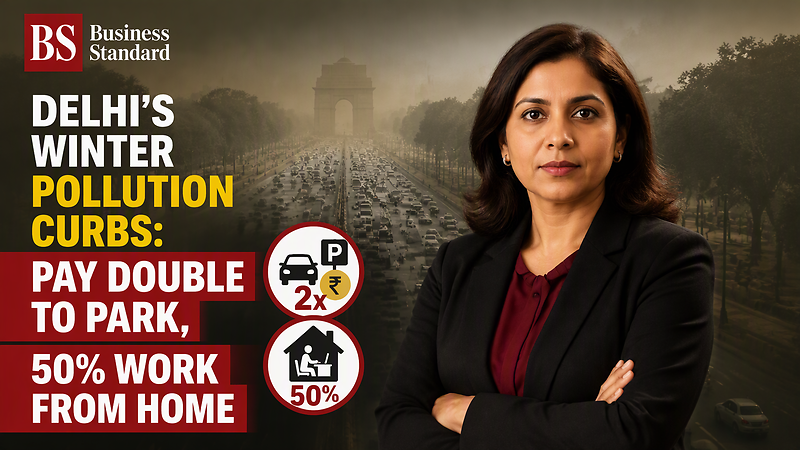
As Delhi grapples with severe air pollution, a contentious debate has emerged over responsibility and the efficacy of government measures. Business Standard reports that the Delhi government has implemented a winter pollution action plan that includes doubling parking charges from November 1, 2026, to February 28, 2027, and requiring government and private offices to operate at 50% attendance during this period. This plan aims to discourage private vehicle use and promote public transport, with strict enforcement of pollution control measures, including fines for vehicles lacking valid pollution under control (PUC) certificates.
In contrast, Delhi Minister Manjinder Singh Sirsa, speaking on India Today, emphasizes the importance of adhering to the 'no PUC, no fuel' rule, which will be monitored using Automatic Number Plate Recognition (ANPR) cameras. He argues that this measure is crucial for reducing pollution levels and expresses gratitude for the central government's support in implementing an intelligent traffic management system designed to streamline traffic flow and minimize emissions. Sirsa also urges residents to use only Supreme Court-approved green crackers during festivals to balance environmental concerns with cultural traditions.
Further complicating the narrative, another India Today report highlights a complete construction ban in Delhi from December 10 to January 20, aimed at mitigating dust pollution, a significant contributor to the city's air quality crisis. This ban complements the aforementioned measures and reflects a broader strategy to tackle the pollution problem head-on. The report reiterates the doubling of parking charges and the staggered work-from-home policies for both government and private sectors, reinforcing the government's proactive stance.
While Business Standard focuses on the logistical implications of the new regulations, Sirsa's comments underscore the moral responsibility of citizens to comply with environmental regulations. He warns that failing to adhere to the no-PUC rule will not only harm individuals but also damage the environment, highlighting a shared concern about the air quality crisis.
This multifaceted approach to addressing Delhi's pollution crisis reveals a common thread: the need for stricter enforcement and community cooperation. However, the debate continues over who ultimately bears the responsibility for the pollution crisis—whether it lies with the government for implementing effective measures or with the citizens for complying with these regulations. The voices from Business Standard and India Today illustrate the urgency of the situation while also showcasing the complexities of ownership in the fight against air pollution in Delhi.