Balancing Faith and Public Order: The Debate on Religious Processions
Oct 16, 2026, 13:29 IST
Summary
The debate over religious processions in public spaces features Youtuber Sanjay Dixit supporting the Kanwar Yatra for its community comfort, while Abhishek Tiwary celebrates the vibrant journey of pilgrims. Dixit also raises concerns about inclusivity during festivals, questioning the representation of different faiths. This tension highlights the balance between faith, tradition, public order, and community safety.
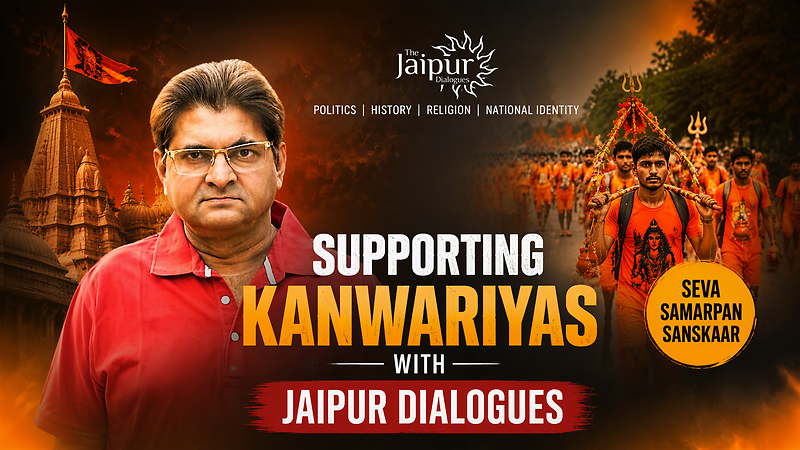
As religious processions and festivals increasingly fill public spaces, a debate has emerged around their significance versus the concerns of public order, noise, and safety. Youtuber Sanjay Dixit from Jaipur Dialogues supports the Kanwar Yatra, stating that their social media camp provides comfort to pilgrims during the Sawan month. He emphasizes the importance of community support for Kanwariyas, highlighting that attendees at his events express gratitude for the service provided to them.
In contrast, Abhishek Tiwary, another popular Youtuber, documents the Kanwar Yatra, noting the vibrant chants of 'Bol Bam' as pilgrims make their way from Sultanganj to Deoghar. His videos capture the energy and devotion of the participants, reinforcing the cultural and spiritual significance of such processions. Tiwary’s focus on the physical journey of the Kanwar Yatra demonstrates a celebration of faith and tradition, which many devotees hold dear.
However, the conversation takes a different turn when Dixit raises concerns about inclusivity during religious festivals. In a separate video, he questions the presence of Muslim stalls at a Durga Puja pandal, arguing that Hindus lack their own stalls in such spaces. This perspective brings forth a critical discussion about the balance of representation in public festivals and the potential for tensions between different faith communities.
While both creators celebrate the rich traditions associated with religious processions, they also highlight the underlying tensions. Dixit’s concerns about representation suggest that not all communities feel equally included in these public celebrations, which may lead to further discussions about noise and public order. On the other hand, Tiwary’s depiction of the Kanwar Yatra encapsulates a collective experience, uniting participants in their faith, yet this celebration can also be seen as a point of contention for those who prioritize public order and safety.
The differing viewpoints underline the complexities surrounding religious festivals in public spaces. As Dixit advocates for support of the Kanwar Yatra while questioning the inclusion of other faiths in Hindu festivals, Tiwary focuses on the spiritual journey and communal aspects of the pilgrimage. This dynamic illustrates a broader societal debate about faith, tradition, and the implications for public order and community safety, leaving room for further dialogue on how to navigate these intersections respectfully.