Can Indian Knowledge Traditions Influence Modern Development and Health?
Oct 25, 2026, 19:38 IST
Summary
The debate on whether Indian knowledge traditions can shape modern development and health features distinct voices. Ajeet Bharti argues for the cyclical nature of traditional Indian practices, while Dr Mickey Mehta highlights the borrowing of Indian wisdom by Western figures and critiques colonial impacts on these traditions. Both emphasize the need to reclaim and apply these teachings today.
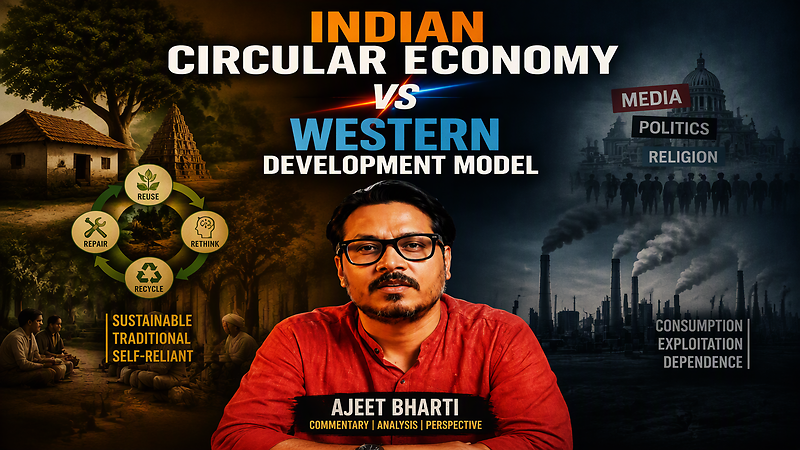
The debate surrounding whether Indian knowledge traditions can shape modern development and health is multifaceted, with distinct voices offering compelling arguments. Ajeet Bharti, a Youtuber, emphasizes the cyclical nature of traditional Indian construction and development, arguing that past practices allowed for necessary material progress without destructive consequences. He states, "Traditional Indian development pursued necessary material progress without destructive consequences," highlighting how Indian methods allowed for recycling and reuse, contrasting sharply with contemporary Western practices that he believes promote destructive competition.
In contrast, Dr Mickey Mehta, a wellness expert, asserts that Western self-help figures have borrowed extensively from Indian wisdom, specifically from Vedic and yogic teachings. He claims, "Western self-help figures borrowed from India's Vedic and yogic teachings," advocating for a return to Indian gurus who provide original knowledge. He insists that these figures have contributed significantly to modern advancements, stating, "India contributed to NASA, astrophysics, nuclear weapons, and modern science." This perspective aligns with his view that Indian traditions hold untapped potential for global recognition and application.
Dr Mehta further elaborates on the impact of British colonialism on Indian knowledge systems in another video. He argues that the British discredited yoga and Ayurveda to weaken Indian cultural identity, saying, "British authorities replaced yoga education with physical training in schools." He contends that this shift not only dismantled traditional practices but also reversed the benefits of ancestral teachings, emphasizing a need to reclaim this lost wisdom.
Both Bharti and Mehta share a common concern regarding the influence of Western culture on Indian society. Bharti critiques the education system and social media for promoting Western ideals over traditional values, lamenting, "Education and social media encourage Western imitation and undressing for rapid success." Meanwhile, Dr Mehta questions how India became a slave to Western culture, noting that prior to British rule, India was economically robust and culturally rich.
While both perspectives agree on the detrimental effects of Westernization, they diverge in their proposed solutions. Bharti advocates for a return to cyclical, sustainable practices in development, while Dr Mehta calls for a revival of Indian spiritual and holistic health practices. This nuanced debate highlights the potential of Indian knowledge traditions to contribute positively to modern development and health, urging a reevaluation of their role in a rapidly globalizing world.
As this discussion unfolds, it becomes clear that the integration of Indian knowledge traditions into contemporary practices may offer pathways to sustainable development and holistic health, challenging the dominance of Western paradigms.