Censorship in Overdrive: Voices Clash on Film Restrictions
Aug 19, 2026, 02:14 IST
Summary
The debate on film censorship in India features sharp divides among creators. YouTuber Meghnad S. highlights the government's excessive censorship, claiming it backfires, while also offering strategies for creators to resist it. Political commentator Dr. Qamar Cheema critiques the cultural implications of censorship, asserting that Punjabi cinema is overlooked, emphasizing the need for recognition of its global significance.
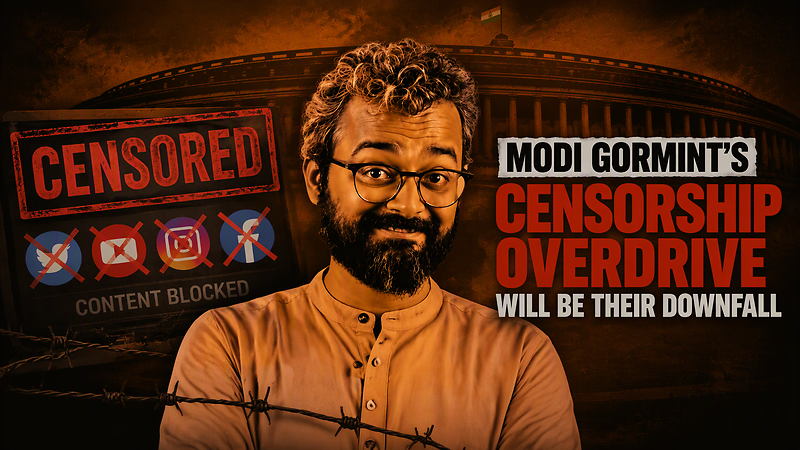
As film censorship escalates in India, content creators are sharply divided on the implications and effectiveness of these measures. Popular YouTuber Meghnad S. highlights the alarming rate of censorship under the Modi government, claiming that nearly 195,000 social-media blocking orders were issued in just five months. In his video, he asserts, "censorship is being done because they think that they will be able to control this madness... But instead, it started backfiring." He cites the rise of the Instagram account Dimagi Naxal Party, which gained followers after being shadow banned, as an example of how censorship can have the opposite effect of its intended purpose.
In a follow-up video, Meghnad offers strategies for combating government censorship. He encourages creators to flood platforms like Meta with content, suggesting that the sheer volume of posts can overwhelm censorship efforts. "Just flood it... if you feel like your videos are getting censored, contact other creators and collaborate," he advises. This perspective aligns with his earlier assertion that censorship often backfires, as creators find creative ways to navigate restrictions.
Contrasting with Meghnad's focus on social media, political commentator Dr. Qamar Cheema brings attention to the impact of censorship on film culture, particularly regarding Punjabi cinema. In his analysis, he argues that the cultural contributions of Punjabi artists are often overshadowed by political narratives. He states, "Punjabi culture dominates India's music, films, politics, and popular entertainment," asserting that the banning of Punjabi films reflects deeper political tensions. Cheema critiques the Indian government's approach, suggesting that it fails to recognize the global appeal of Punjabi art and its significance in cultural exchanges.
While both Meghnad and Cheema highlight the negative consequences of censorship, they approach the issue from different angles. Meghnad focuses on the mechanics of censorship and how creators can resist it, while Cheema emphasizes the cultural ramifications and the need for recognition of Punjabi contributions. Both creators suggest that censorship not only fails to suppress voices but often amplifies them, leading to greater visibility and engagement.
The debate reveals a complex landscape where censorship is met with resistance, innovation, and a call for cultural recognition. As these voices continue to clash, the future of film and artistic expression in India remains uncertain, yet vibrant with potential for change.