Challenging Patriarchy: Voices from Religion and Caste
Nov 25, 2026, 20:30 IST
Summary
A debate on challenging patriarchy within religion and caste features diverse perspectives. Arfa Khanum Sherwani argues for constitutional rights for women, while Pooja Prasanna advocates for using religious texts to combat misogyny. Shubhankar Mishra critiques societal acceptance of women as goddesses without equal rights, and Hafiz Ghulam Sarwar presents controversial views on gender roles in Islam. Together, they highlight the complex struggle for women's equality.
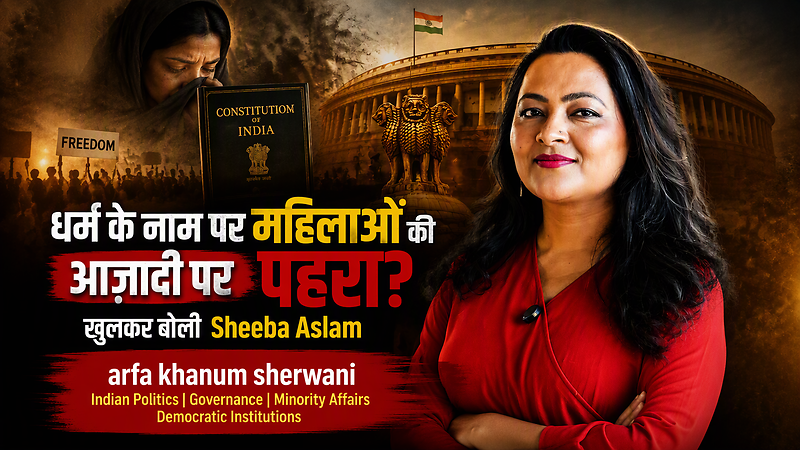
In a vibrant discussion about challenging patriarchy within religious and caste frameworks, several voices emerge with diverse perspectives. Popular YouTuber Arfa Khanum Sherwani argues that religious leaders across various faiths continue to confine women to domestic roles, suggesting that such restrictions are rooted in outdated beliefs. She states, 'Protecting women is used to restrict Muslim women's public freedom and mobility,' emphasizing that constitutional rights are essential for Muslim women to pursue careers as nurses, teachers, and doctors.
Sherwani further elaborates that patriarchy fears strong, independent women, especially Dalit women who resist oppression. In her commentary, she insists, 'Patriarchy fears intelligent, independent, fearless women who ask questions,' highlighting the need for women to challenge societal norms actively.
Contrastingly, Pooja Prasanna, a commentator on religious frameworks, suggests that the challenge against misogyny must come from within religious texts themselves. She argues that many historical figures in Islam were women who held significant societal roles, stating, 'Islamic history includes women scholars, rulers, businesspeople, and public leaders.' Prasanna posits that the logic of modernity fails when addressing patriarchal views held by religious leaders, advocating instead for the application of constitutional rights to protect marginalized women.
Shubhankar Mishra, a commentator on Hindu perspectives, critiques the acceptance of women as goddesses while denying them equal rights. He states, 'Patriarchal society accepts women as goddesses but resists granting equal rights,' arguing that societal perceptions need to evolve for true equality to be achieved. He further emphasizes that women have historically been instrumental in creation, citing that 'Brahma created the world with a man and a woman, signifying the essential role of women in society.'
Mishra also addresses the issue of women's representation in religious practices, expressing discomfort with the lack of acceptance for women on the Vyaspeeth. He notes, 'Women must struggle to establish their rights and place in society,' reflecting on the longstanding traditions that complicate this struggle.
In a more controversial view, Hafiz Ghulam Sarwar presents a perspective on gender roles within Islam. He asserts that while men can marry multiple wives, women are not afforded the same freedom, which he rationalizes by stating, 'Islam permits men four wives, but does not permit women multiple husbands.' Sarwar’s arguments highlight the perceived natural differences in responsibilities between genders, which he argues are inherent and justified by religious texts.
As these voices illustrate, the debate around patriarchy within religion and caste is multifaceted, with proponents for reform advocating for both internal challenges from within religious teachings and broader societal changes. The consensus among many is clear: for true equality, women must not only be recognized as equals but also be empowered to occupy spaces traditionally dominated by men, challenging both caste and patriarchal structures head-on.