Does Genuine Devotion Outweigh Rituals in Spirituality?
Oct 22, 2026, 21:00 IST
Summary
The debate over whether genuine devotion is more important than ritual and religious identity features varied perspectives. Shubhankar Mishra argues that humility and kindness may connect individuals to God more than ritualistic pride. He contrasts this with Dr. Mickey Mehta's critique of manifestation in spirituality, emphasizing the need for genuine faith over commercialized practices. Together, they explore the essence of true devotion.
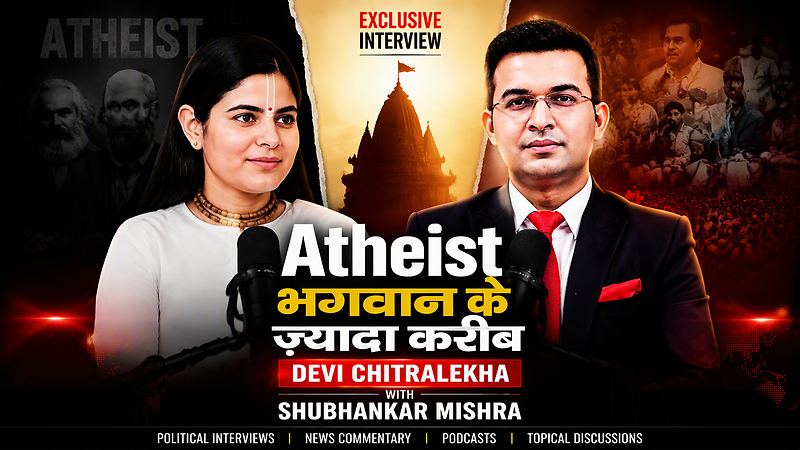
In a thought-provoking debate, various perspectives emerge on whether genuine devotion holds greater significance than ritual and religious identity. Popular YouTuber Shubhankar Mishra presents a nuanced view, arguing that a kind and humble individual who does not engage in rituals may be closer to God than an arrogant worshipper. He states, 'A kind, humble non-worshipper may be closer to God than arrogant worshippers,' highlighting the notion that ego can distort true devotion. Mishra further elaborates that while ritualistic practices like chanting may appear outwardly spiritual, they can lack genuine feeling if performed with pride. He asserts, 'Ego shows ritual chanting remains external and lacks genuine devotional feeling.' In this light, he believes that kindness and humility can gradually lead non-worshippers toward prayer and a deeper connection with the divine.
Mishra also addresses the role of pride in spirituality in another video, claiming that 'Pride is the greatest sin because it distances people from God.' He argues that as individuals grow in pride, their spiritual connection diminishes, reinforcing his earlier point that devotion performed for show, rather than true feeling, undermines its value. This consistent emphasis on the internal state of the worshipper suggests that authenticity in devotion is paramount.
In a different vein, Mishra examines the impact of social media on spirituality, noting that the rise of spiritual figures on platforms has both positive and negative aspects. He observes, 'Even performative attendees are moving from alcohol clubs toward devotional venues,' suggesting that while some may engage in spirituality for show, it still represents a shift towards a more positive environment.
Mishra also draws on the narrative of Radha and Krishna to illustrate selfless devotion, stating that Radha and the gopis willingly accept the possibility of suffering in hell for the sake of Krishna's happiness. He claims, 'If Krishna's happiness requires us to go to hell, we are ready,' showcasing the depth of their love and commitment. This perspective further emphasizes that true devotion transcends ritualistic practices and is characterized by selflessness.
Contrasting with Mishra’s views, Dr. Mickey Mehta, a wellness expert, critiques the modern trend of manifestation in spirituality. He argues that the commercialization of spiritual practices dilutes genuine faith. According to him, 'People with genuine faith should not try to manifest their own outcomes,' implying that true spirituality relies on surrendering to the divine rather than attempting to control outcomes through manifestation techniques.
While Mishra's perspectives highlight the importance of internal qualities like humility and selflessness, Mehta's critique suggests that the rise of commercialized spirituality may detract from these values. Both creators agree on the necessity of genuine connection to the divine but diverge in their views on how contemporary practices may influence this connection.
The debate surrounding genuine devotion versus ritual and identity reveals a complex landscape where authenticity, pride, and social influences intertwine. As audiences reflect on these perspectives, the underlying question remains: can genuine devotion flourish in a world increasingly focused on external rituals and identities?