Is Gen Z Lazy or Just Different? A Generational Debate
Jul 30, 2026, 08:20 IST
Summary
The debate over whether Generation Z is lazy or just different features diverse perspectives from content creators. Sharan Hegde highlights job market fears due to AI, Anushka Rathod attributes spending habits to economic challenges, Prakhar Gupta blames older generations for a broken world, and Vinamre Kasanaa humorously illustrates workplace disconnects. Together, they reveal a nuanced generational struggle.
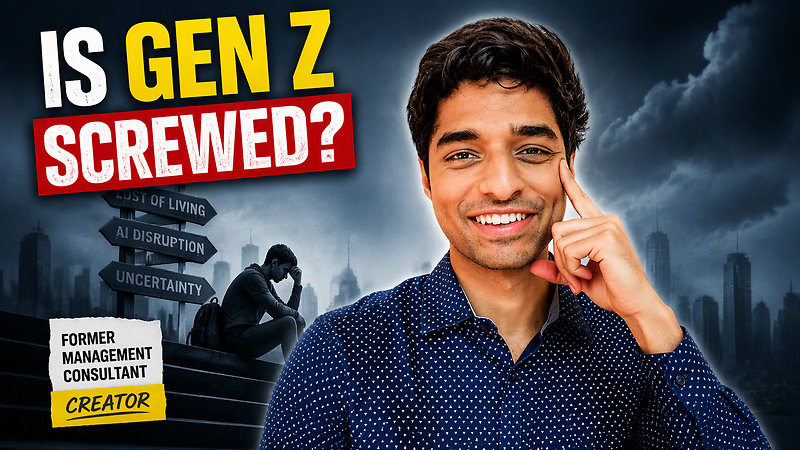
The debate surrounding whether Generation Z is lazy and irresponsible or simply different from previous generations is heating up, with various content creators weighing in on the topic. Each perspective sheds light on the challenges faced by young people today, particularly in India.
Sharan Hegde, a popular YouTuber, raises concerns about the future job market for Gen Z, particularly in India. In his video, he discusses how this generation is increasingly worried about the impact of artificial intelligence on employment. He likens their situation to that of the Lehman Brothers bankers during the 2008 financial crisis, noting that many young engineers are questioning their career prospects. Hegde introduces the concept of Jevons paradox, suggesting that as AI lowers the costs of coding, the demand for engineers might actually increase. He argues, "If there is a new technology whose cost drops, its usage increases more than when its cost was higher," which implies that companies may require more engineers as they adapt to new technologies.
Contrastingly, Anushka Rathod, another content creator, argues that the financial landscape inherited by Gen Z plays a crucial role in their perceived irresponsibility. She emphasizes that today's young adults face a stark reality where purchasing a home requires 20 to 30 years of income, compared to just 10 to 15 years for their parents. Rathod cites a survey indicating that 46% of Gen Z believes they will never afford a home, highlighting an increasing wealth gap where the top 1% holds 40% of the nation's wealth. She suggests that this expanding aspiration gap leads young people to engage in what she calls "compensatory spending," where they prioritize immediate gratification over long-term savings. Rathod notes, "When the goal you want to achieve is mathematically impossible, the marginal rupee goes towards a trip or a smartphone."
On a different note, Prakhar Gupta, a popular influencer, questions the blame placed on Gen Z for their struggles. He argues that older generations have created a "broken world" for the younger generation to navigate. Gupta states, "We are the ones who broke that world," and emphasizes that the restlessness and confusion seen in Gen Z is a reflection of the world they have inherited. He points out that older generations often perceive youth as lacking intelligence, while younger people feel misunderstood.
In a more humorous take, Vinamre Kasanaa, a podcaster, illustrates the generational divide through a skit depicting a millennial boss's frustration with a Gen Z employee. The boss criticizes the employee for taking time to type instead of using modern voice tools. This exchange highlights the expectations that older generations have of the younger workforce, showcasing a disconnect in work styles and priorities. Kasanaa’s skit underscores the notion that Gen Z is often viewed as lazy when they are actually adapting to a rapidly changing technological landscape.
In summary, the debate around Generation Z’s perceived laziness versus their distinct approach to life reveals a complex interplay of economic challenges, generational misunderstandings, and evolving work dynamics. While Hegde, Rathod, Gupta, and Kasanaa each offer unique insights, they collectively illustrate that the issues facing Gen Z are far from straightforward, often reflecting broader societal changes rather than individual failings.