Is Hindi Film Music Declining? A Clash of 90s Melodies and Today's Sound
Nov 2, 2026, 15:00 IST
Summary
The debate over Hindi film music's decline contrasts the cherished melodies of the 90s with today's sounds. Shubhankar Mishra discusses Lata Mangeshkar's legacy, while others like Anu Malik and Manoj Muntashir acknowledge the talents of contemporary artists like Vishal Mishra. Anuradha Paudwal defends the coexistence of new voices, and reflections on cultural nostalgia add depth to the ongoing discussion.
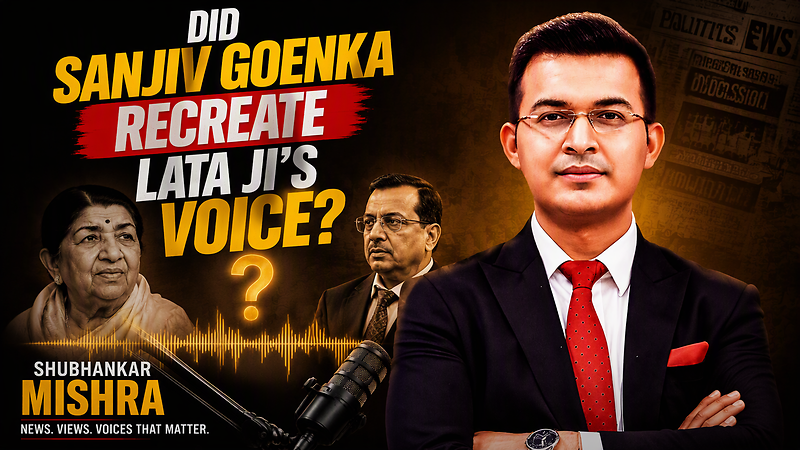
The debate surrounding the evolution of Hindi film music often pits the beloved melodies of the 1990s against today's contemporary sounds. Many argue that the essence of Hindi film music has waned, while others defend the current era's innovation.
Shubhankar Mishra, a popular YouTuber, highlights a recent controversy regarding the recreation of Lata Mangeshkar's iconic voice. In his video, he discusses how Sanjiv Goenka removed instrumentation from her songs but did not attempt to recreate her voice. He states, 'An experiment to recreate Lata Mangeshkar's voice completely failed,' suggesting that the purity of her original recordings remains unmatched. Mishra's perspective underscores a nostalgic yearning for the past, where the raw emotion of the singer's voice was often paramount.
In contrast, Shubhankar Mishra also explores the current landscape in another video, emphasizing the relevance of new talents. He references Vishal Mishra, who, according to Anu Malik, possesses Sonu Nigam-level talent. Malik argues, 'If anyone can fill Sonu's shoes today, it is Vishal.' This assertion brings a nuanced view to the table, suggesting that while the past is revered, there are artists today who could potentially carry forward that legacy.
Manoj Muntashir, also featured in Shubhankar's videos, expresses admiration for the groundbreaking work of past composers like Anu Malik and Javed Akhtar, stating, 'What they created was original and new for its time.' He admits to frequently feeling dissatisfied with his own work, indicating a struggle to reach the heights set by previous generations. Muntashir's acknowledgment of the past's influence adds depth to the debate, showing respect for the foundational artists while striving for innovation in his own creations.
Anuradha Paudwal adds another layer to this discussion by asserting that while new voices emerge, they do not necessarily threaten Mangeshkar's legacy. She notes that past artists like Nazia Hassan did not overshadow Mangeshkar, suggesting that each generation can coexist without diminishing the other's impact. Paudwal's view encourages a broader understanding of musical evolution, where newer talents can thrive alongside the legends.
Meanwhile, content creator Prakhar Gupta reminisces about the vibrant culture of Hindi television, particularly the sitcom F.I.R., which showcased characters with memorable catchphrases and absurd scenarios. His nostalgic reflection points to a time when creativity and unique storytelling were at the forefront, contrasting with some contemporary offerings that may lack that same charm.
Anil Sharma, in discussing the success of films like Gadar: Ek Prem Katha, argues that its impact on Bollywood's pan-India model is unparalleled. He claims, 'Gadar attracted more than 10 crore theatrical viewers,' emphasizing how its success set a benchmark for future films. This statement highlights a belief that while the industry has changed, certain elements of the past continue to resonate powerfully with audiences today.
The debate ultimately reveals a complex relationship between nostalgia for the 90s and appreciation for today's artists. While some creators express a longing for the melodies of yesteryears, others advocate for the innovative potential of the current music scene. The evolution of Hindi film music remains a vibrant discussion, reflecting both a reverence for the past and an embrace of the future.