Is Indian TV Journalism Beyond Repair? A Divided Perspective
Sep 24, 2026, 06:44 IST
Summary
The debate on whether Indian TV journalism is beyond repair features diverse perspectives. Neha Nagar highlights structural flaws, while Sarthak Goswami notes the negative impact of anchors on aspiring journalists. Sakshi Joshi and Pooja Prasanna discuss engagement issues and the role of reporters in shaping narratives. Sandeep Deo calls for drastic reforms, while Arfa Khanum Sherwani advocates for integrity in journalism.
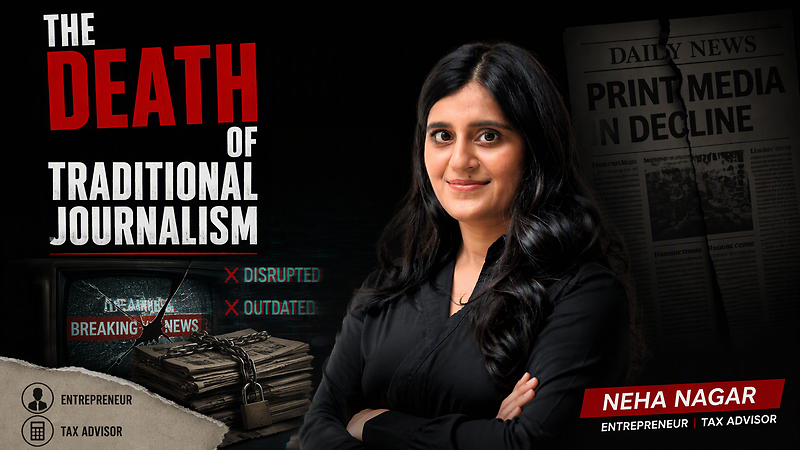
The state of Indian TV journalism has sparked intense debate among content creators, with some arguing that it is fundamentally flawed, while others express hope for reform. Neha Nagar, a journalist, highlights structural issues in the industry, claiming, "Insufficient newsroom budgets prevent journalists from conducting thorough investigations," and stresses that advertiser pressure often discourages critical stories that could harm major advertisers. This sentiment is echoed by Sarthak Goswami, who observes that the behavior of news anchors has alienated potential journalism students. He states, "Indian children are avoiding journalism after seeing television news anchors' conduct," pointing to a broader crisis of credibility in the media.
In a different vein, Sakshi Joshi critiques the apparent disconnect between follower counts and engagement on major news platforms. She asserts, "Aaj Tak has 38 million Facebook followers but receives limited video engagement," indicating that traditional media may be losing touch with its audience. This is supported by Pooja Prasanna, who notes that while many reporters operate under pressure from their editors, they often play a role in perpetuating negative narratives. She states, "Reporters can help feed material into media systems that vilify dissenters," emphasizing the complex dynamics at play within the industry.
Faye D'Souza introduces another dimension, arguing that media outrage can create undue pressure on law enforcement. She claims, "Media outrage travels faster than information, pressuring police to deliver immediate justice," highlighting how sensationalism can skew public perception and impact judicial processes. Meanwhile, Sandeep Deo takes a stark position, declaring that television media has "divided Indian society and spread lies and corruption," suggesting that drastic measures, such as shutting down channels, are necessary for reform.
Pooja Prasanna further complicates the discussion by pointing to the historical context of journalism in India, citing colonial laws that restricted the press as a precursor to today's challenges. She notes that "the colonial state could not easily control a population beginning to form its own political judgments," suggesting that current media struggles echo past battles for freedom of expression.
Amidst these varied perspectives, Arfa Khanum Sherwani reflects on her lengthy career in journalism, stating that her decision to leave the field stemmed from a desire to speak out against what she perceives as a decline in journalistic integrity. She emphasizes, "I felt it was necessary for people like us to come forward and show courage," suggesting that the fight for quality journalism is ongoing.
The debate surrounding the future of Indian TV journalism reveals a landscape fraught with challenges but also a glimmer of hope for those willing to advocate for change. As voices from across the spectrum weigh in, it remains clear that while the situation is dire, the potential for reform exists if journalists and media houses can realign their values towards integrity and accountability.