Is Social Media Destroying Relationships? A Divided Debate
Sep 1, 2026, 04:49 IST
Summary
Content creators Ankit Inspires India and Luke Coutinho present contrasting views on social media's impact on relationships. Ankit argues that personalized feeds create division and bias, while Luke claims these platforms reshape perceptions of normal relationships. Both highlight the significant influence of algorithms, raising concerns about the authenticity of connections formed online.
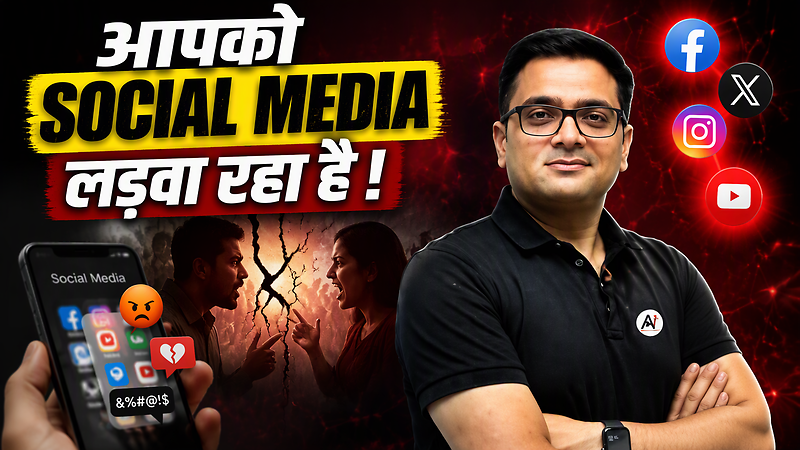
The impact of social media on relationships has sparked a heated debate among content creators, with contrasting views on whether these platforms are beneficial or detrimental to interpersonal connections. Popular YouTuber Ankit Inspires India contends that social media fosters division by presenting users with highly personalized feeds that can warp perceptions. He argues, 'Instagram, YouTube and X show users contrasting portrayals of the same protest,' suggesting that algorithms amplify biases and create echo chambers. Ankit warns that this leads individuals to feel informed while dismissing opposing viewpoints as ignorant, saying, 'Personalized feeds make opposing users feel informed while dismissing others as ignorant.'
In contrast, influencer Luke Coutinho highlights a different aspect of the relationship dynamics altered by social media. He asserts that these platforms have fundamentally changed the nature of relationships themselves. According to Luke, 'Social media has changed perceptions of what relationships are normal and available.' He points out that exposure to diverse relationship models, such as polyamory and open relationships, can lead to an altered understanding of what constitutes a typical relationship. Luke explains that social media doesn't reflect a random sample of society; rather, it amplifies the most controversial and emotionally charged content, creating a perception that these new forms of relationships are more prevalent than they may actually be. He notes, 'Algorithms prioritize controversial, novel, emotionally charged relationship content.'
Both creators agree on the significant influence of algorithms in shaping users' experiences. Ankit emphasizes the dangers of personalized content feeds that can skew perspectives and promote divisiveness, while Luke warns of the risk of developing 'availability bias'—the tendency to assume that what is frequently seen online is representative of reality. He elaborates that frequent exposure to certain relationship types might lead people to believe that such arrangements are widespread.
Despite their differing focal points, both creators underscore the impact of social media on how relationships are perceived and enacted. Ankit's focus on societal division through contrasting portrayals complements Luke's exploration of changing relationship norms, painting a comprehensive picture of the complex interplay between social media and human connection.
Ultimately, the debate reveals a shared concern: while social media can facilitate connections, it also harbors the potential to distort perceptions and erode traditional relationship structures. As users navigate these platforms, the challenge remains to discern genuine connections from algorithmically curated experiences.