Kathas: Timeless Wisdom or Mere Storytelling?
Nov 24, 2026, 20:57 IST
Summary
The debate on kathas' relevance reveals contrasting views. YouTuber Rajiv Malhotra argues that kathas embody profound wisdom from ancient texts, providing age-specific lessons. He claims they cultivate moral understanding and explain life's purpose. Critics may see them as mere storytelling, raising questions about their practical application today. Ultimately, kathas bridge generational gaps with both ancient wisdom and contemporary relevance.
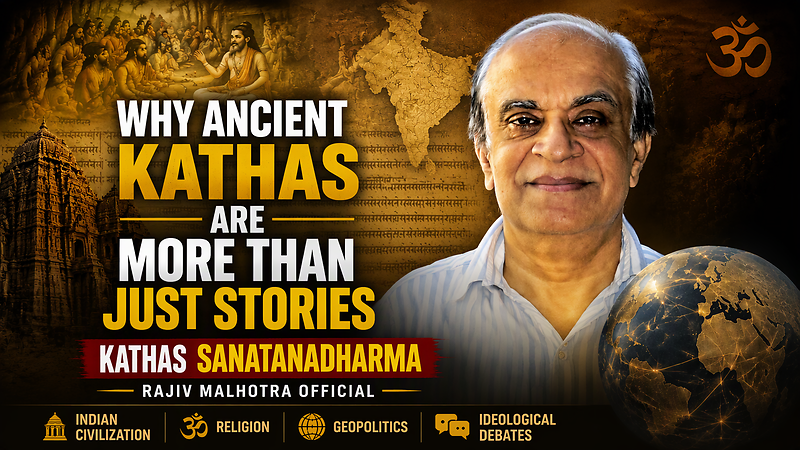
The debate around the relevance of kathas, traditional narratives rooted in Sanatana Dharma, raises intriguing questions about their role across generations. Popular YouTuber Rajiv Malhotra argues that kathas are more than just stories; they encapsulate profound Vedantic knowledge conveyed through ancient texts like the Mahabharata, Ramayana, and 18 Puranas. He emphasizes that these narratives serve age-specific lessons, stating, 'Kathas offer age-specific lessons, from childhood morality to adult cosmic philosophy.' Malhotra highlights that for children, kathas present moral lessons, while for adults, they delve into the essence of life, exploring themes such as existence and cosmic connection.
In a related video, Rajiv Malhotra further elaborates on the significance of kathas, asserting that they draw from a rich heritage of wisdom found in the Puranas, Itihasas, and Upanishads. He claims, 'Katha stories cultivate unwavering confidence and deeper moral understanding,' positing that they play a vital role in explaining the purpose of human life through the unique forms of Shakti, or power, that humans possess. This perspective positions kathas as essential tools for instilling ethical values and existential insights across various life stages.
However, the question remains: are kathas primarily ancient wisdom or symbolic storytelling? While Malhotra insists on their foundational role in imparting wisdom, some critics may view them as embellished narratives, serving more as cultural symbols than direct teachings. The emphasis on metaphorical storytelling could be seen as diminishing their practical application in modern contexts.
Despite differing interpretations, both perspectives recognize the adaptability of kathas. They can resonate with diverse audiences, from children to adults, each extracting relevant lessons that align with their life experiences. This versatility highlights the potential for kathas to bridge generational gaps, offering a blend of ancient wisdom and contemporary relevance.
As the debate continues, it becomes clear that kathas are not merely relics of the past but dynamic narratives that evolve with each generation. Whether viewed as profound wisdom or symbolic storytelling, their impact on moral and philosophical understanding remains significant, prompting ongoing exploration and dialogue in contemporary society.