Night Owls vs Early Risers: Does It Really Matter for Health?
Sep 22, 2026, 11:30 IST
Summary
The debate over night owls versus early risers reveals starkly different perspectives. Dr Alok Chopra emphasizes the biological clock's importance for health, while Shubhankar Mishra warns that late-night habits can lead to long-term health issues. Both creators agree on the critical role of sleep quality, but differ in focus on immediate versus long-term consequences.
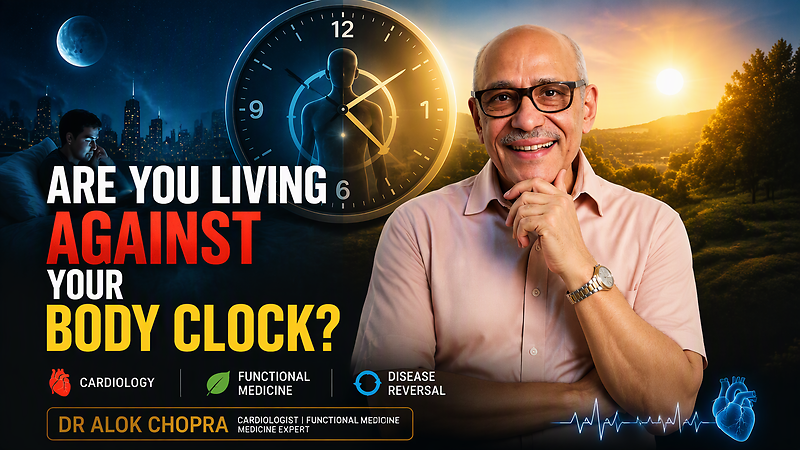
The debate over whether being a night owl or an early riser matters has sparked contrasting views among content creators. Dr Alok Chopra, a health expert, emphasizes the significance of the biological clock, stating, 'A biological clock is permanently embedded in the body’s DNA.' He argues that this internal clock is crucial for waking up at specific times, which can influence one's health and fitness routines.
In contrast, Shubhankar Mishra, a popular YouTuber, raises concerns about the modern tendency to stay up late. He claims that late-night waking disrupts the biological clock, which can lead to health issues later in life. According to him, 'Health effects may emerge years later as muscle loss and nervous-system weakness.' He warns that while young people may feel invincible now, the long-term consequences of a disrupted sleep schedule could be severe, particularly after the age of 40 or 50.
Mishra further elaborates on the importance of nighttime sleep in another video, asserting that it is more beneficial than daytime sleep. He notes that 'Daytime sleep is shallower because noise, light, and activity prevent complete mental relaxation.' This highlights a consensus among both Chopra and Mishra: the quality and timing of sleep are critical for health.
However, while Chopra focuses on the biological mechanisms behind sleep patterns, Mishra emphasizes the lifestyle choices of today's youth and their potential repercussions. This divergence in focus illustrates a nuanced debate; while both agree on the importance of sleep, they differ in their emphasis on the immediate versus long-term effects of sleep habits.
In conclusion, the debate between night owls and early risers is not just a matter of personal preference but is deeply tied to health implications. As both Chopra and Mishra highlight, understanding and respecting our biological clocks could be key to maintaining overall health, particularly as we age.