The Appearance Advantage: Unpacking Career Bias
Nov 25, 2026, 20:00 IST
Summary
Content creator Neha Nagar argues that appearance grants an unfair advantage in career growth, asserting that beauty bias influences perceptions significantly. In her videos, she highlights that 93% of impressions are shaped by appearance and speaking style, while also acknowledging the role of personality in overcoming biases. The debate underscores the complexity of appearance in professional settings.
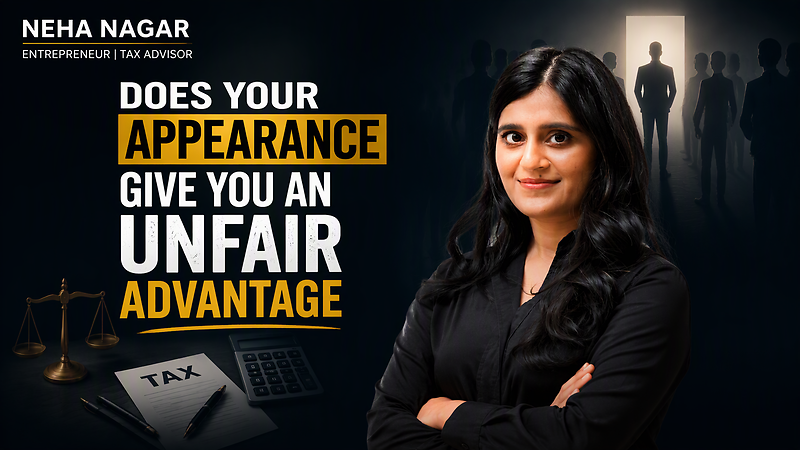
In today's competitive job market, the question of whether appearance grants an unfair advantage is stirring debate among content creators. Popular YouTuber Neha Nagar argues that beauty bias significantly impacts career growth. In her video 'Does Your Appearance Give You an Unfair Advantage?', she states, 'Beauty bias can influence career growth when skills are otherwise equal.' She highlights that in a courtroom setting, a well-dressed individual may receive a lighter sentence compared to someone who appears careless, suggesting that physical appearance can indeed sway perceptions and decisions.
Neha Nagar further explores this theme in another video titled 'Do Attractive People Get More Opportunities?'. Here, she asserts that the way one appears to others affects career opportunities, claiming that '55% of impressions are shaped by appearance, while 38% is influenced by speaking style.' This implies that non-verbal cues and visual appeal dominate initial judgments, overshadowing verbal communication, which she claims accounts for only 7% of how people are assessed.
This perspective raises critical questions about the fairness of career opportunities. Neha Nagar's assertion of a stark divide in how individuals are perceived based on their looks resonates with many who have experienced the impact of appearance in professional settings. The overwhelming emphasis on visual appeal may disadvantage those who are equally skilled but less conventionally attractive.
However, the debate does not end here. While Neha Nagar’s claims suggest a stark reality of beauty bias, it prompts a closer examination of the nuances involved. For instance, one could argue that attributes like confidence and personality can mitigate the disadvantages of appearance. Neha Nagar herself provides an example with comedian Kapil Sharma, who has embraced his limited English skills and turned them into a source of humor, thereby connecting with audiences. This suggests that personality and the ability to communicate effectively can also play a significant role in overcoming biases associated with looks.
In essence, while Neha Nagar's insights into the power of appearance in career advancement are compelling, they also invite a broader discussion about the interplay between looks, skills, and personality. The challenge lies in recognising the potential biases that exist while also celebrating those who defy stereotypes and succeed through different means. The debate continues as more voices join in, exploring the multifaceted nature of this issue and its implications in various professional fields.