What Really Causes Cancer? The Controversy Over Diet Coke, Beef, and Sugar
Oct 27, 2026, 11:43 IST
Summary
The debate on cancer causation features diverse views on Diet Coke, beef, and sugar. Luke Coutinho argues that cancer progression involves more than sugar, while Dr. Santhosh Jacob highlights obesity linked to Diet Coke. Both Dr. Jacob and Dr. Pal Manickam discuss beef's role, emphasizing the need for nuanced understanding over simplistic dietary links. Rujuta Diwekar warns against the myths surrounding sugar's direct impact on cancer.
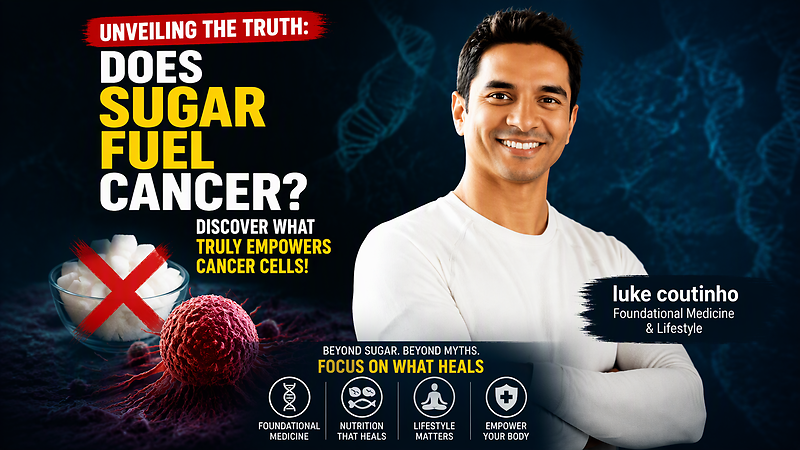
The debate over what truly causes cancer has intensified, with various voices weighing in on the roles of Diet Coke, beef, and sugar. Youtuber Luke Coutinho argues that cancer progression is influenced by more than just sugar or glucose, stating, "Cancer progression is influenced by more than sugar or glucose alone." He notes that both patients who consume sugar and those who avoid it can see similar cancer developments, suggesting that chronic fear and stress play significant roles in cancer progression.
Contrastingly, Dr. Santhosh Jacob raises concerns specifically about Diet Coke, linking it to obesity, which he claims is a proven carcinogen associated with several types of cancer, including gastrointestinal, breast, and colon cancers. He asserts, "Obesity is linked to gastrointestinal, breast, and colon cancers," emphasizing the importance of addressing modifiable factors like diet and lifestyle rather than solely focusing on specific products like Diet Coke.
In another video, Dr. Santhosh Jacob addresses the claim that beef consumption leads to colon cancer. He clarifies that while processed red meats may pose risks due to added salts, there is little evidence linking whole beef to cancer directly. He critiques the oversimplification of dietary links to cancer, stating, "It hasn’t been strongly proven in human studies," and cautions against confusing correlation with causation.
Dr. Pal Manickam contributes to the Diet Coke discussion, noting that while it contains aspartame, classified as a Group 2B possible carcinogen, the risk is exaggerated. He argues, "Cancer risk would require about 120 cans of diet soda daily," suggesting that other factors, like air pollution, present a more significant cancer risk than moderate Diet Coke consumption.
Luke Coutinho further emphasizes the rising cancer rates among young people, linking them to lifestyle factors such as poor nutrition and stress. He states, "Ultra-processed and fast foods allegedly burden children's developing bodies chemically," advocating for a focus on diet quality rather than fear surrounding specific foods.
Rujuta Diwekar challenges the notion that sugar directly fuels cancer, arguing instead that high consumption of junk food leads to obesity, which is linked to increased cancer risk. She states, "High junk-food consumption raises obesity risk, linked to 10–14 cancers," and emphasizes the importance of a balanced diet.
While many creators agree that lifestyle factors significantly impact cancer risk, they diverge on the specific roles of sugar, Diet Coke, and beef. The conversation reveals a complex interplay of dietary habits, stress, and environmental factors, urging a broader understanding of cancer causation rather than attributing it to singular dietary choices.