Women's Safety in India: The Clash of Policing and Social Attitudes
Oct 3, 2026, 14:58 IST
Summary
The debate on women's safety in India features diverse perspectives, with Abhisar Sharma criticizing the BJP's record on women's dignity, while Priya Jain highlights the insufficient social change post-Nirbhaya. Barkha Dutt discusses creative protests at Delhi University, and Faye D'Souza calls for equality. Arfa Khanum Sherwani critiques government measures as distractions from addressing systemic violence against women.
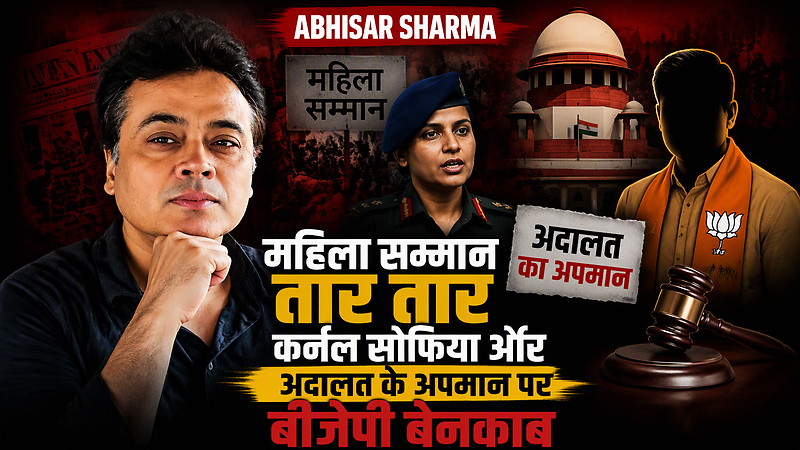
The debate over women's safety in India has ignited a fierce discussion among various content creators, with differing perspectives on the roles of policing, law, and social attitudes. Abhisar Sharma, a journalist, argues vehemently against the current political landscape, particularly targeting the Bharatiya Janata Party (BJP). He claims that no political party has a worse record on women's respect and safety, citing the derogatory comments made by Madhya Pradesh Minister Vijay Shah, who referred to Colonel Sofia Qureshi as a 'terrorist's sister' during Operation Sindoor. Sharma highlights that despite the Supreme Court's approval to prosecute Shah, the state government has chosen to dismiss the case, indicating a lack of accountability regarding women's dignity.
In contrast, Priya Jain from Finology Legal reflects on the aftermath of the Nirbhaya case, acknowledging that while significant legal reforms were introduced, such as amendments addressing stalking and acid attacks, social attitudes have not shifted sufficiently. She points out that moral policing restricts women's freedom, suggesting that societal perceptions continue to label women as vulnerable, thereby limiting their mobility and reinforcing gender inequality.
Barkha Dutt, a prominent journalist, adds a layer of cultural critique by discussing the creative protests from Delhi University students, who have employed food-related slogans to demand safety for women. Dutt emphasizes that these protests are not just about addressing immediate dangers but also challenge the idea that women should have to alter their behavior to avoid violence in public spaces. This sentiment resonates with Faye D'Souza, who stresses the need for equality and urges that everyone, regardless of gender, should feel safe in public. D'Souza underscores the ongoing prevalence of sexual violence, arguing that women must now take their safety into their own hands, as no one will come to their rescue.
Conversely, Arfa Khanum Sherwani critiques the government's response to women's safety, highlighting the proposed restrictions on social media access for minors as a misguided attempt to protect children rather than addressing the systemic issues of violence against women. She argues that such measures distract from the urgent need for safer public spaces and accountability from law enforcement. Sherwani's perspective ties back to the concerns raised by Sharma about political inaction and the failure to protect women adequately.
Overall, the debate reveals a complex interplay between legal frameworks, societal attitudes, and governmental responsibilities. While creators like Sharma and Sherwani emphasize the need for political accountability and systemic change, others like Jain and Dutt highlight the cultural dimensions of women's safety, illustrating that laws alone may not be sufficient without a shift in societal attitudes towards women. The voices in this discussion collectively underscore that true safety for women in India requires both robust legal protections and a profound change in how society views and treats women.