Are the US and Pakistan Friends Again? A Complex Relationship Unveiled
Nov 3, 2026, 10:00 IST
Summary
The debate over whether the US and Pakistan are friends again reveals contrasting views. YouTuber Prakhar Gupta argues that their relationship is functional but not friendly, rooted in wartime necessity. In contrast, the Khanversation channel criticizes US support for Pakistan's military-backed regime, highlighting human rights violations and urging American citizens to be aware of the implications of this alliance.
As the geopolitical landscape shifts, the question of whether the United States and Pakistan have rekindled their friendship arises. Popular YouTuber Prakhar Gupta offers a stark view on this relationship, stating, 'I wouldn't say we had a good relationship with Pakistan. In fact, sometimes it was quite poor.' He emphasizes that while the two nations had to cooperate during the war against Al-Qaeda and Osama bin Laden, they are not allies in any meaningful sense. Gupta argues that the end of the Afghanistan war under President Biden was overdue and indicates that the relationship has been more functional than friendly.
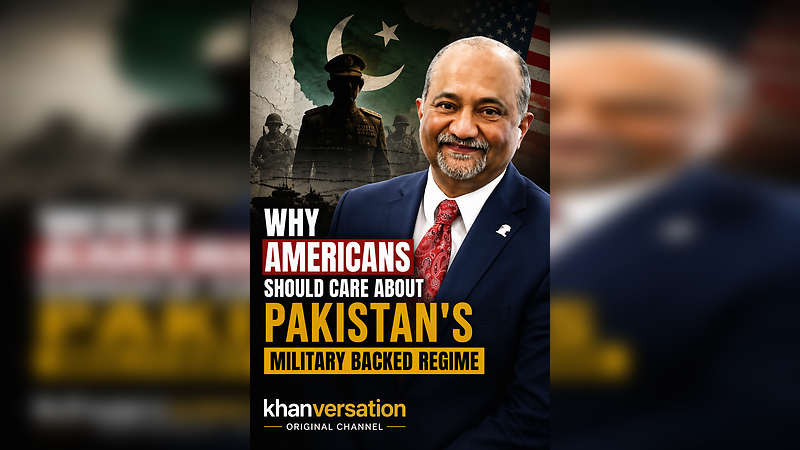
In contrast, another perspective comes from the Khanversation Original Channel, which critiques the US government's ongoing support for Pakistan's military-backed regime. The creator asserts, 'Trump openly supports Pakistan’s military-backed government and Field Marshal Asim Munir,' highlighting concerns about American taxpayer money funding a military accused of severe human rights violations. This creator calls for American citizens to be alarmed, arguing that their tax dollars support an army that undermines the rule of law and suppresses fundamental rights in Pakistan.
While Gupta acknowledges the necessity of cooperation during wartime, he stops short of labeling the US-Pakistan relationship as friendly. He states, 'Beyond that, I don't think we have a particularly special relationship with Pakistan.' This sentiment echoes the concerns raised by the Khanversation channel, which underscores the troubling aspects of US support for a regime that has been accused of repression and brutality.
The disagreement between these two perspectives highlights a significant tension: Gupta focuses on the pragmatic aspects of US-Pakistan ties during military operations, while the Khanversation channel emphasizes the moral implications of supporting a regime that violates human rights. This divergence raises questions about the ethics of international alliances and the responsibilities of governments towards the people of allied nations.
Moreover, both creators seem to agree on one point: the relationship is fraught with complexities and does not fit neatly into the category of friendship. Gupta’s pragmatic approach contrasts sharply with the more critical stance of the Khanversation channel, which calls for accountability and awareness among American citizens regarding their government’s actions abroad.
In conclusion, the debate on whether the US and Pakistan are friends again is underscored by differing interpretations of their historical relationship and current dynamics. While Gupta sees the relationship as a necessary, albeit strained, partnership, the Khanversation channel warns against the implications of supporting a regime that undermines democratic values. This ongoing discussion reflects broader concerns about foreign policy and the nature of international alliances in a changing world.