Bulldozers on Mosques: Clearing Encroachment or Targeting Religious Sites?
Oct 21, 2026, 09:00 IST
Summary
The use of bulldozers on mosques has sparked debate over urban development versus religious discrimination. Ajit Anjum highlights a mosque demolition in Saharanpur, while Ashok Kumar Pandey discusses threats to the Race Course Mosque in Delhi. Saurabh Shukla emphasizes the moral implications of such actions, and Sanjay Dixit notes potential demolitions at Kolkata Airport, all raising questions about fairness in treatment of religious sites.
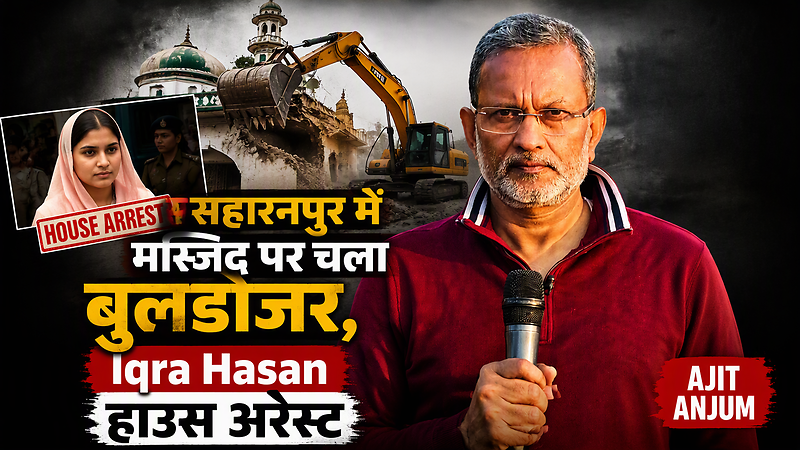
The recent use of bulldozers on mosques has ignited a fierce debate about whether these actions represent necessary urban development or a troubling pattern of religious discrimination. Ajit Anjum, a prominent journalist, highlights the demolition of a mosque in Saharanpur, stating, "A bulldozer was used against a mosque in Saharanpur," and notes that police justified the action by citing security concerns related to the Janmashtami festival. Anjum's account raises questions about the motivations behind such demolitions, suggesting a targeted approach rather than a purely regulatory one.
In contrast, Sanjay Dixit from The Jaipur Dialogues focuses on the potential demolition of a mazar at Kolkata Airport. While his commentary does not delve deeply into the implications of this action, it aligns with Anjum's concerns about the treatment of religious sites, suggesting a broader context of scrutiny on places of worship.
Saurabh Shukla, a YouTuber known as The Red Mike, adds another layer to the discussion. He asserts that "a true Sanatani never hurts another religion or interferes with its faith." This perspective suggests a moral framework that opposes the destruction of places of worship, framing the bulldozer actions as inconsistent with the values of respect for religious diversity. Shukla's call for media representatives to reconsider their portrayals of such events also hints at a broader responsibility to highlight the implications of these actions.
Ashok Kumar Pandey, a commentator with The Credible History, provides a detailed account of ongoing demolitions in Delhi, particularly focusing on the Race Course Mosque. He states, "Delhi’s Race Course Mosque faces demolition after notice and electricity-water disconnections," indicating that this mosque is among several that have recently faced similar threats. Pandey points to a pattern of demolitions affecting historically significant mosques, arguing that these actions lack legal justification and are part of a wider trend of targeting religious sites.
All four perspectives share a common concern about the implications of demolishing religious sites, yet they approach the issue from different angles. While Anjum and Pandey emphasize the specific instances of demolition and the potential for discrimination, Shukla highlights the moral implications of such actions within the context of Hindu beliefs. Dixit, while not as focused on the moral aspects, suggests that the scrutiny of religious sites like the Kolkata mazar reflects a wider issue of how such actions are perceived.
The debate ultimately revolves around whether these demolitions are necessary actions to reclaim land or a selective targeting of religious minorities. The creators collectively highlight the need for transparency and fairness in how urban development is approached, suggesting that the current methods may undermine communal harmony and respect for all faiths. As bulldozers continue to reshape the urban landscape, the discourse surrounding these actions will likely evolve, demanding ongoing scrutiny and dialogue.