Calls for Gyanesh Kumar's Resignation: A Divided Opposition's Strategy
Nov 2, 2026, 07:50 IST
Summary
The debate over Chief Election Commissioner Gyanesh Kumar's future intensifies as opposition leaders from various parties demand his resignation, suspension, or even arrest. Key figures like Abhishek Manu Singhvi and Sanjay Raut highlight concerns over electoral integrity, while protests erupt nationwide. Calls for Kumar's accountability reflect a deepening crisis in India's electoral processes.
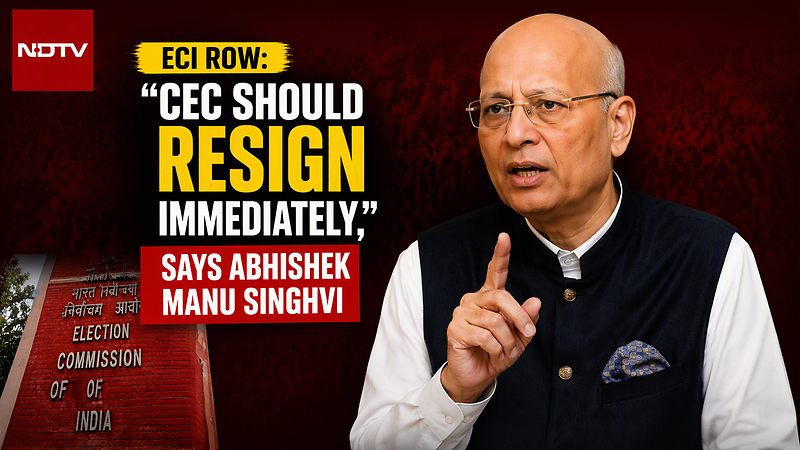
As the political landscape in India grows increasingly fraught, the opposition's response to Chief Election Commissioner Gyanesh Kumar's controversial actions has sparked a heated debate. Multiple voices from various political backgrounds have emerged, each demanding different forms of accountability ranging from resignation to criminal charges.
Abhishek Manu Singhvi, a senior Congress leader, firmly demands Kumar's immediate resignation, claiming, "If there is any constitutional disgrace among constitutional authorities, they should resign immediately." He argues that the Election Commission (EC) has been compromised, stating, "This is a dual assault: one inside the Election Commission and another by the government outside, attacking every constitutional institution."
On the other hand, Kapil Sibal calls for the suspension of Gyanesh Kumar amid ongoing controversies surrounding the EC's handling of electoral processes. His stance reflects a broader concern within the Congress party regarding the integrity of the elections, particularly in light of discrepancies in the Special Intensive Revision (SIR) process.
Manoj Jha, a member of the Rashtriya Janata Dal, also echoes the call for Kumar's resignation, emphasizing that his position is untenable pending an investigation into the SIR. He asserts that the credibility of the electoral process is at stake, highlighting the importance of transparency and accountability within the EC.
Sanjay Raut, from the Shiv Sena, takes a more aggressive stance, labeling Kumar as corrupt and demanding his dismissal alongside criminal action. Raut claims, "Kumar is a traitor to democracy and must be removed immediately," pointing to a series of objections raised against the EC's decisions as evidence of mismanagement.
Meanwhile, KC Venugopal of the Congress party argues that Kumar has lost all authority to remain in office, stating, "He should resign immediately because even his election commissioners are turning against him now." This sentiment is echoed by other opposition leaders, including Karti Chidambaram and Tejashwi Yadav, who both emphasize the need for a complete overhaul of the electoral process.
The debate has escalated to calls for Kumar's arrest, with Delhi Chief Minister Arvind Kejriwal leading the charge, asserting that Kumar's actions amount to "vote theft." Akhilesh Yadav of the Samajwadi Party supports this view, describing the demand for Kumar's arrest as essential to restoring democratic integrity.
Protests have erupted across the country, with the Congress party leading the charge. Reports indicate that demonstrations have taken place in multiple states, emphasizing the opposition's collective discontent with the current electoral administration. The protests reflect a unifying theme: a shared belief that the integrity of the electoral process is at risk under Kumar's leadership.
While some voices within the opposition call for Kumar's resignation, others question the effectiveness of such measures. Asaduddin Owaisi asserts that Kumar is unlikely to resign, suggesting that the focus should instead be on abolishing electronic voting machines altogether.
The INDIA bloc's coordinated protests against the SIR process and Kumar's leadership further highlight the urgency of the opposition's demands. Mallikarjun Kharge, Congress president, articulates the party's position: "We will continue to fight for justice and the restoration of democracy in India."
In this charged atmosphere, the opposition's endgame remains uncertain, but the pressure on Gyanesh Kumar is mounting. As calls for accountability resonate across the political spectrum, the debate surrounding the future of the Election Commission and its leadership is likely to intensify in the lead-up to the next elections.