Calls for Independent Probe into Police Violence at CJP March Intensify
Oct 17, 2026, 19:24 IST
Summary
Content creators are calling for an independent investigation into police conduct during the CJP march, with Dhruv Rathee and Ajit Anjum leading criticisms of police violence against protesters. Injured students recount severe injuries and police brutality, while some voices question the legitimacy of the protests. The debate highlights the urgent need for accountability in law enforcement actions.
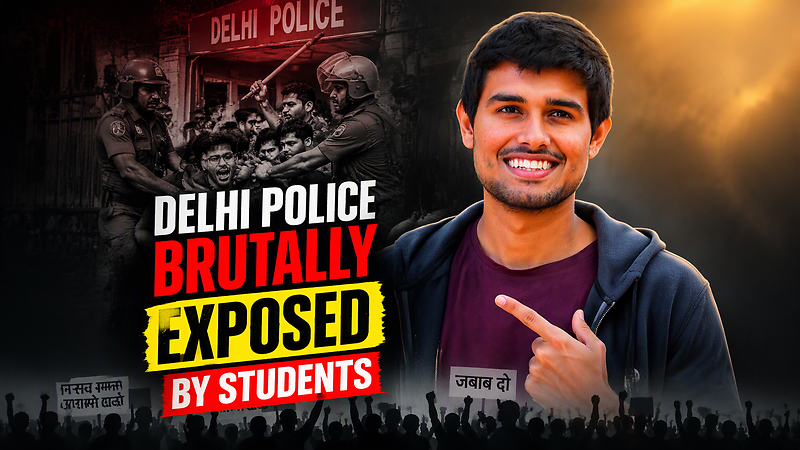
Tensions surrounding police conduct during the recent CJP march have sparked a heated debate among content creators, with calls for an independent investigation gaining traction. Many voices, including popular YouTuber Dhruv Rathee, vehemently criticize the actions of the Delhi Police, asserting that their use of force against nonviolent protesters was excessive and unwarranted. Rathee claims, 'Delhi Police used lathi charges and tear gas against nonviolent protesters,' highlighting instances where police allegedly threw stones at demonstrators and even removed their nameplates to evade accountability.
Ajit Anjum, another prominent voice in this discussion, echoes Rathee's sentiments, providing firsthand accounts from injured students. He states, 'Police used tear gas and severely lathi-charged peaceful CJP protesters,' as he showcases injuries sustained during the demonstration. Anjum's videos depict students displaying fractures and bleeding wounds, emphasizing that these injuries occurred while they were simply trying to protest peacefully.
Further complicating the narrative, Anjum also details how some injured individuals sought refuge in nearby homes only to be pursued and assaulted by police, stating, 'Police entered the JD(U) office and beat injured people sheltering there.' This adds a layer of urgency to the call for an independent probe, as it suggests a pattern of violence that extends beyond the initial confrontation.
In contrast, some accounts raise questions about the legitimacy of the protests themselves. One student, speaking to Ajit Anjum, claims that police taunted protesters, saying, 'You came here for ₹500,' implying that their motivations were insincere. This sentiment is echoed in another video where a protester alleges that police labeled them as 'anti-national' despite carrying educational documents to prove their intentions.
The physical toll on participants is starkly illustrated by testimonies from injured students. A young protester named Akbar recounts, 'I sustained a head injury during the July 20 police lathi charge,' and shares how he was attacked by plainclothes officers. Similarly, another protester recounts, 'A 21-year-old Delhi woman entered intensive care after around 50 people fell on her,' demonstrating the severe consequences of police actions.
Barkha Dutt, a seasoned journalist, provides a broader context, stating, 'CJP protesters were beaten instead of having their concerns heard.' This perspective emphasizes the systemic issues within police conduct and the need for accountability.
The debate over police brutality is further complicated by conflicting narratives regarding the protests. Some creators, like Ajit Anjum, emphasize the peaceful intentions of the demonstrators, while others hint at underlying tensions, suggesting that police were under pressure and that their actions stemmed from frustration. Anjum notes, 'Police officers insulted and physically assaulted student protesters during demonstrations,' while simultaneously acknowledging the complexities surrounding the protests.
As these narratives unfold, the question remains: Should there be an independent investigation into police conduct during the CJP march? With numerous accounts of violence and allegations of police misconduct, the case for scrutiny grows stronger, highlighting the need for accountability in law enforcement actions.