Can India Face Another Emergency? A Clash of Perspectives
Oct 9, 2026, 16:48 IST
Summary
The debate over the possibility of another emergency in India reveals contrasting views. Priya Jain argues that legal safeguards make a repeat of the 1975 emergency unlikely, while Sakshi Joshi suggests that the country is already in a state of 'open emergency,' calling for government accountability. Both perspectives highlight the importance of protecting democracy amidst rising concerns.
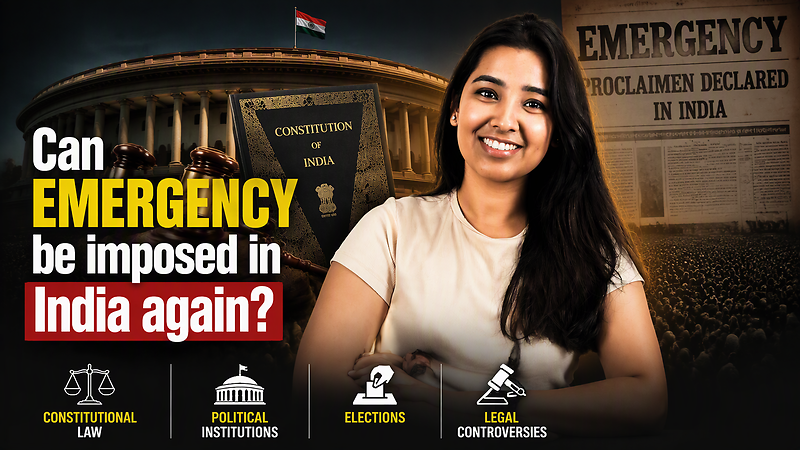
The possibility of another emergency in India has sparked intense debate among content creators, each presenting unique perspectives on the matter. Finology Legal's Priya Jain delves into the historical context of the 1975 emergency, arguing that the legal landscape has shifted significantly since then. She points out that the Allahabad High Court's decision to invalidate Indira Gandhi's 1971 election was based on alleged malpractices involving police assistance and government employment. Jain asserts that if similar circumstances arose in 2026, they would not be classified as crimes under current laws. She emphasizes that imposing an emergency now would require both cabinet and parliamentary approval, and crucially, that Articles 20 and 21 of the Constitution remain protected, meaning fundamental rights cannot be suspended arbitrarily.
In stark contrast, Youtuber Sakshi Joshi highlights the contemporary climate in India, suggesting that the country is already experiencing a state of 'open emergency.' She references Neha Bora's appeal, which warns of the potential for mass arrests, drawing parallels to the 1942 Quit India movement. Joshi's argument centers around the notion that the government must be held accountable for its actions, indicating a belief that the current political environment mirrors the conditions that led to past emergencies.
The clash between these two perspectives is palpable. While Jain focuses on the legal mechanisms and protections that would hinder a future emergency, Joshi and Bora evoke a sense of urgency about the government's accountability and the potential for civil liberties to be eroded under the guise of state security. Jain’s legalistic approach suggests that a repeat of 1975 is unlikely due to constitutional safeguards, while Joshi's emotional appeal highlights a perceived threat to democratic principles in the present day.
The debate showcases a significant divide: one side rooted in legal analysis and historical precedent, while the other is driven by current political sentiments and fears of authoritarianism. Both creators agree on the importance of safeguarding democracy but differ on the current state of affairs and the likelihood of an emergency being declared again. Ultimately, the discussion reflects broader concerns about governance, accountability, and civil rights in India today, leaving the question open: Can an emergency happen in India again, or are we already living through one?