Can Rahul Gandhi's Popularity Bridge Congress's Organisational Divide?
Nov 2, 2026, 14:58 IST
Summary
The debate around Rahul Gandhi's rising popularity and Congress's organisational gap features insights from journalist Barkha Dutt. She notes Gandhi's growing appeal among youth but warns that Congress lacks the organisational strength to convert this into votes. Dutt also highlights a narrowing popularity gap with Modi, yet stresses the urgent need for organisational reform to ensure electoral success.
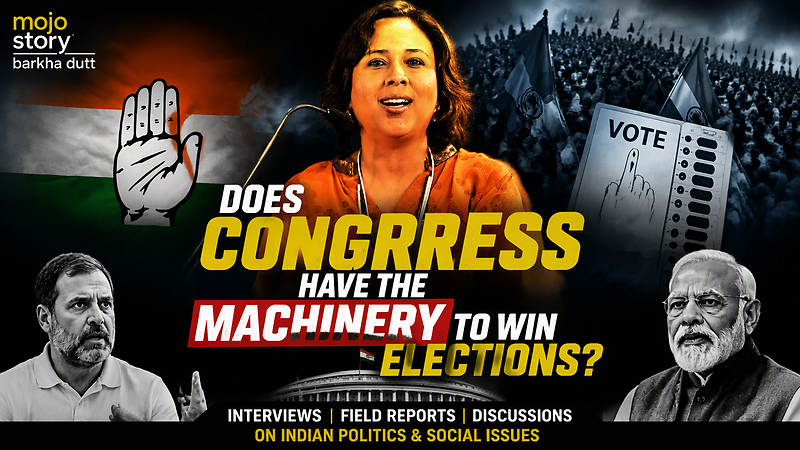
The question of whether Rahul Gandhi's rising popularity can overcome Congress's organisational gap has sparked a lively debate among commentators. Popular journalist Barkha Dutt, in her video on the Congress's electoral machinery, highlights a crucial point: while Gandhi's appeal, particularly among the youth, is growing, the Congress party lacks the organisational strength to translate this goodwill into votes. Dutt argues, 'Unemployment is fuelling youth frustration and Rahul Gandhi’s growing appeal.' However, she warns that 'without an effective organisation to convert goodwill into votes, Congress's chances of winning elections remain slim.'
Dutt points out that the BJP's organisational machinery continues to be a formidable force, stating, 'Their organisational strength is their key asset, despite losing grassroots support under Narendra Modi.' This underscores the challenge Congress faces in not only boosting Gandhi's image but also in building a robust organisational framework to support him.
In a separate video, Dutt addresses the shifting popularity dynamics between Rahul Gandhi and Narendra Modi. She notes a significant narrowing of the popularity gap, with Gandhi's ratings improving from 'completely dissatisfied' to 'somewhat satisfied,' while Modi's ratings have declined from 'very satisfied' to 'somewhat satisfied.' Dutt states, 'The gap has shrunk from 30% to around 12% now,' indicating that Gandhi is making headway in public perception. This shift could be pivotal, as Dutt highlights, 'After 12 years, he has managed to establish his presence.'
Despite these positive indicators for Gandhi, the challenge remains for Congress to leverage this momentum effectively. Dutt articulates that the party's organisational weaknesses are a critical hurdle, saying, 'Without a strong organisation, even the best intentions cannot translate into electoral success.' This sentiment echoes throughout the debate, emphasising the need for Congress to not only harness Gandhi's rising popularity but also to reform its organisational strategies.
As the debate unfolds, it becomes clear that while there are signs of hope for Gandhi, the road ahead is fraught with challenges. The question remains: can Congress evolve its organisational structure in time to support Gandhi's growing appeal and convert it into electoral victories? The perspectives shared by Dutt offer a nuanced view of the current political landscape, highlighting both the potential and the pitfalls that lie ahead for Congress under Gandhi's leadership.