Can Reconciliation Work Between PTI and the Government?
Oct 3, 2026, 14:00 IST
Summary
The debate on PTI-government reconciliation showcases contrasting perspectives. Najam Sethi highlights the People's Party's involvement and the challenge of preventing PTI's long march, while Dr. Qamar Cheema criticizes PTI's avoidance of Islamabad and internal conflicts, questioning the potential for successful negotiations. Both agree on the difficulties ahead.
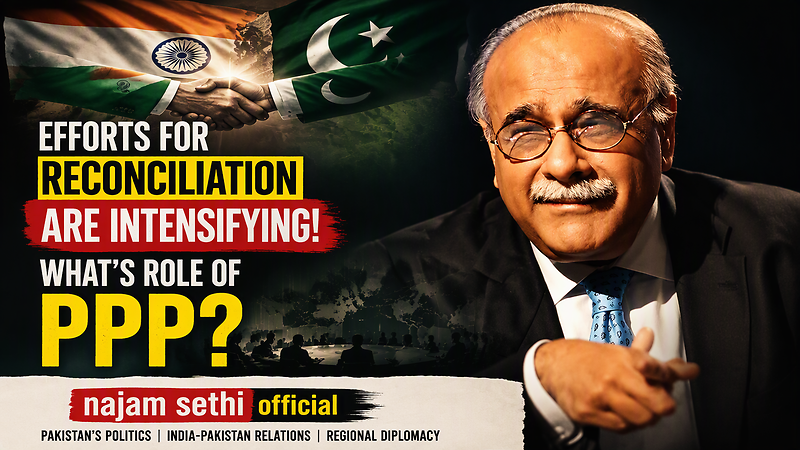
The ongoing discussions about reconciliation between the Pakistan Tehreek-e-Insaf (PTI) and the government reveal a landscape fraught with tension and conflicting viewpoints. Najam Sethi, a political commentator, argues that the People's Party has stepped into the reconciliation process following a significant meeting at Awan-e-Sadr. He notes that despite ongoing dialogues, substantial progress remains elusive, stating, "The storm's direction has not changed; it's challenging to redirect it. The agenda is to end the storm, not to change its course." Sethi emphasizes that any attempt at a long march by PTI will be met with firm resistance, suggesting that authorities will not allow such actions under any circumstances. He points out that if Sohail Afridi, the Chief Minister of Khyber Pakhtunkhwa, does not alter his stance, he risks losing his position, indicating the high stakes involved in these negotiations.
Contrastingly, Dr. Qamar Cheema, a political analyst, presents a more skeptical view regarding the success of these talks. In his analysis, he reveals that PTI's plans for upcoming activities involve avoiding Islamabad altogether, instead opting for a prolonged presence in Peshawar and Swabi. He critiques PTI's leadership, suggesting that their refusal to engage with Speaker Ayaz Sadiq's office undermines any potential for meaningful dialogue. Cheema states, "Conflicting PTI positions leave little room for successful negotiations with the government," highlighting a disconnect that may hinder reconciliation efforts.
Both creators agree on the challenges facing reconciliation, but their interpretations differ significantly. Sethi leans towards a more optimistic view of the People's Party's involvement, suggesting it might provide some leverage in negotiations, whereas Cheema's perspective focuses on the disarray within PTI and its implications for effective communication with the government.
The discourse reveals a complex interplay of strategies and misalignments. Sethi argues for a cautious approach, emphasizing the need for political actors to recognize the broader implications of their actions. In contrast, Cheema calls out PTI's perceived ineffectiveness and lack of coherence, which he believes will ultimately derail any attempts at constructive dialogue. As both sides navigate these turbulent waters, the question remains: can genuine reconciliation take root amidst such discord?