Can Students Face Punishment for Protesting? Legal Perspectives Clash
Nov 5, 2026, 20:02 IST
Summary
The debate over whether students can be punished for protesting centers on Supreme Court Justice Ujjal Bhuyan's assertion that such punitive actions are unconstitutional. Ashutosh Ranka supports this view, warning against intimidation tactics. In contrast, Ratna Singh criticizes the judicial system's handling of protests, arguing it suppresses youth voices, revealing a significant divide in perspectives.
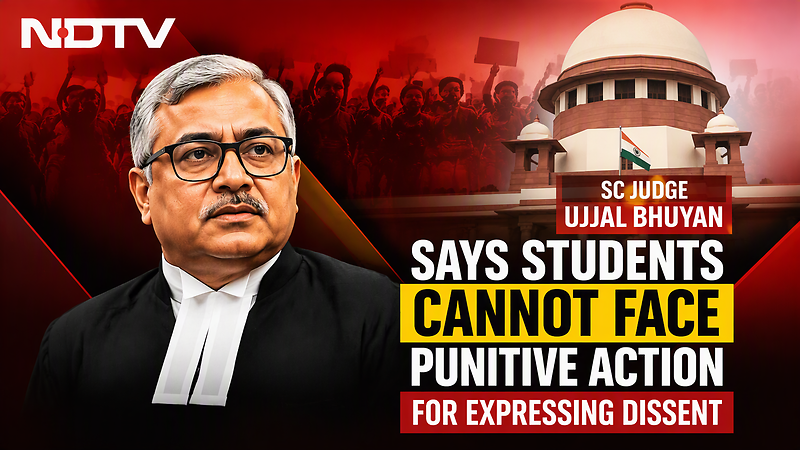
The recent remarks from Supreme Court Justice Ujjal Bhuyan have ignited a heated debate over whether students can be punished for protesting. Justice Bhuyan firmly stated that questioning in a democracy is not an act of defiance but a fundamental expression of citizenship and constitutional responsibility. He emphasized that students should not face punitive actions merely for expressing dissent or differing viewpoints. This perspective was echoed by Ashutosh Ranka, a leader associated with the Congress party, who warned that any attempt to intimidate students could escalate their protests. Ranka argued that the government must listen to students' legitimate demands instead of silencing them, highlighting the ongoing student protests linked to the Congress party.
In a similar vein, NDTV reported on Justice Bhuyan's comments during a graduation ceremony, underscoring that punishing students for their dissent is unconstitutional. He reiterated that the Constitution of India does not seek to unify thought but instead creates a framework for diverse beliefs and opinions to coexist. This perspective aligns with Ranka's assertion that the government's intimidation tactics could backfire, potentially strengthening the student movement.
However, not all voices in this debate are aligned with the views of Justice Bhuyan and Ranka. Ratna Singh, a prominent figure speaking on behalf of the SCM court, criticized the judicial process surrounding student protests, claiming that the system is being misused to suppress youth voices. Singh pointed out that the court had rejected sureties and ordered two days of judicial custody for individuals involved in protests, arguing that such actions demonstrate a disregard for individual freedoms. She contended that the judiciary is failing to protect citizens' rights and that the misuse of legal authority aims to silence dissenting voices among the youth.
The clash between these perspectives reveals a significant divide in how the judiciary and political figures perceive the rights of students to protest. While Justice Bhuyan and Ranka advocate for the protection of student voices and their right to dissent, Singh highlights systemic failures that threaten those rights. The dialogue around this issue suggests that, while there is a consensus on the importance of student expression, there are stark disagreements on how the legal system handles protests and dissent.
As the debate unfolds, the implications for student activism and governmental responses remain critical. With increasing scrutiny on how authorities manage protests, the perspectives shared by these figures illustrate the complexities of upholding constitutional rights in the face of dissent. The future of student protests may hinge on the balance between governmental authority and the rights of individuals to question and challenge the status quo.