Can the Mecca Defense Pact Deter the Houthis Without Becoming Offensive?
Oct 28, 2026, 21:00 IST
Summary
The Mecca Defense Pact has ignited debate over its potential to deter the Houthis without becoming offensive. Khanversation argues for Turkey's defensive role and Pakistan's offensive capabilities, while questioning the pact's credibility. Dr. Qamar Cheema suggests Saudi Arabia should negotiate with the Houthis, highlighting Pakistan's limitations and advocating for dialogue over military solutions.
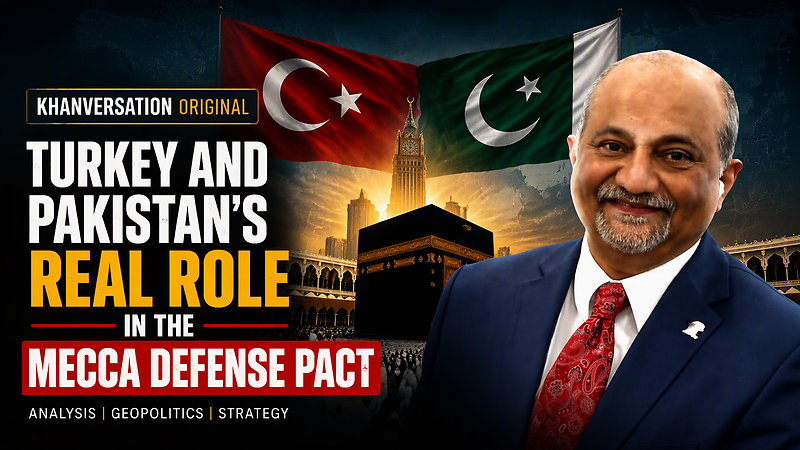
The Mecca Defense Pact has sparked a heated debate about its potential effectiveness against the Houthis and whether it risks becoming an offensive alliance. Youtuber Khanversation argues that Turkey will primarily provide air and technological defense for Saudi Arabia, while Pakistan is likely to offer offensive capabilities and coordinate with Saudi air forces. He notes, 'Pakistan has deployed troops and fighters in Saudi Arabia, unlike Turkey,' suggesting a more active role in defense against the Houthis.
However, Khanversation expresses skepticism about the pact's credibility, stating, 'Unless this defense alliance achieves a significant victory against the Houthis, its credibility will evaporate.' He warns that any real combat involving Turkish and Pakistani forces alongside Saudi troops could shift the pact's nature from defensive to offensive. He draws parallels with the U.S. failures against both the Taliban and the Houthis, questioning why this new coalition would succeed where others have not.
In contrast, Global Politics with Dr. Qamar Cheema offers a nuanced perspective, suggesting that Saudi Arabia's military engagement may not align with its interests. He contends that the Kingdom's support for U.S. and Israeli strikes against Iran has provoked retaliatory actions from Iran and the Houthis. Cheema states, 'Saudi Arabia cannot eliminate the Houthis and should consider negotiating,' highlighting the ongoing attacks on Saudi infrastructure and the potential for escalating conflict.
Cheema further emphasizes Pakistan's limitations, noting, 'Pakistan will not send ground forces,' indicating a cautious approach to the alliance's commitments. He raises concerns about the strategic costs of direct intervention, suggesting that Pakistan must manage its relationship with Iran while balancing its commitments to Saudi Arabia.
Another perspective from Cheema discusses the implications of the Mecca Pact on Pakistan's involvement in Yemen. He argues that the pact presents a significant test for Pakistan's military commitments, stating, 'If Pakistan engages directly, it risks overstretching its military and facing domestic challenges.' He warns that the influence of Iran on the Houthis complicates the situation, as it limits the extent to which Pakistan can control outcomes.
Khanversation further supports the idea of limited objectives, stating, 'If the limited goal is to seize Mokha and the Red Sea islands, that seems possible given the coalition formed by Mohammed bin Salman.' He acknowledges the defensive roles assigned to Turkey and Pakistan, with Turkey providing technology and drones, while Pakistan reportedly participates in airstrikes against the Houthis.
Ultimately, there is a consensus among some creators that military solutions may not be effective in resolving the conflict. Cheema asserts, 'Political goals cannot be achieved through military means,' arguing for a dialogue-based resolution to the conflict. He urges that instead of escalating military efforts, Saudi Arabia should consider funding development initiatives for the Houthis to foster peace.
This debate illustrates the complexity of the Mecca Defense Pact, as voices within the discussion grapple with the challenges of deterrence, the potential for offensive actions, and the need for diplomatic solutions in the ongoing conflict with the Houthis.